SEO Copywriting Guide: How to Write Content That Ranks, Engages & Converts
- By admin
- Aug 31, 2026

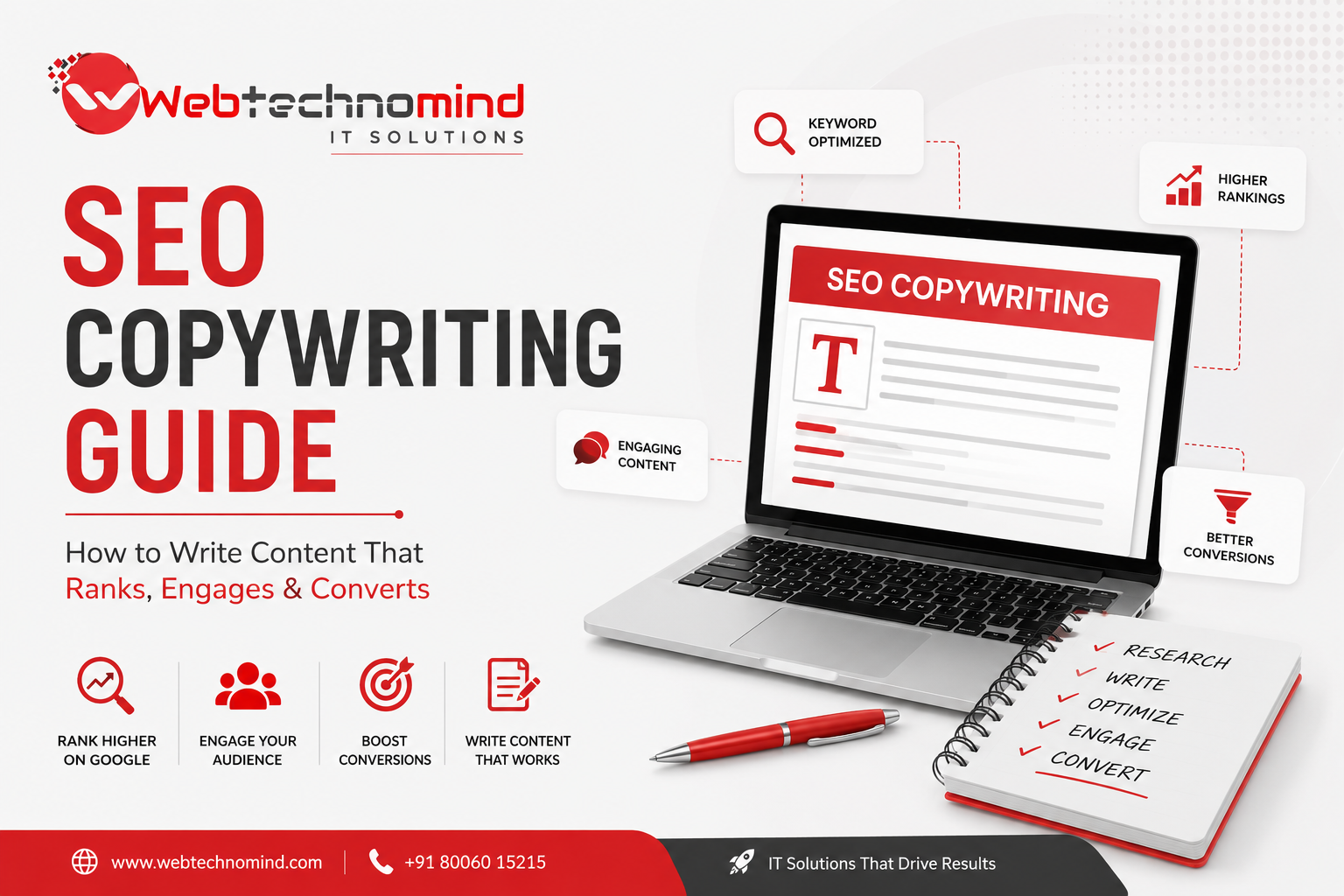







SEO copywriting is no longer about filling an article with keywords and hoping Google ranks it. Modern search engines evaluate content based on relevance, usefulness, experience, clarity, and how well it satisfies search intent. At the same time, your content needs to connect with real people, build trust, and encourage them to take action.
That is why effective SEO copywriting sits at the intersection of search engine optimization, content strategy, persuasive writing, and user experience.
Whether you are writing website pages, blog posts, landing pages, product descriptions, or service content, the goal is the same: create content that attracts the right audience, answers their questions, and moves them closer to becoming a customer.
This SEO copywriting guide explains how to create content that ranks, engages, and converts.
SEO copywriting is the process of creating valuable, persuasive content that is optimized for search engines while remaining natural and useful for readers.
Traditional copywriting focuses primarily on persuasion and conversions. SEO content writing focuses heavily on visibility in search results. SEO copywriting combines both.
A strong SEO copy should:
The best content does not feel like it was written for a search engine. It feels like it was written specifically for the person searching.
One of the biggest SEO copywriting mistakes is starting with keywords instead of understanding what the searcher actually wants.
Search intent is the reason behind a search query. Someone searching for “what is SEO copywriting” probably wants an explanation, while someone searching for “SEO copywriting agency” may be looking for a service provider.
Search intent generally falls into four categories:
Informational intent: The user wants to learn something.
Navigational intent: The user wants to find a specific website, brand, or page.
Commercial intent: The user is researching products or services before making a decision.
Transactional intent: The user is ready to take an action such as purchasing, booking, or signing up.
Before writing, ask: What does the user expect to find when they search this query?
Your content should answer that expectation quickly and comprehensively.
Keywords remain important, but modern SEO is about more than repeating one primary keyword.
Start by identifying one primary keyword that closely matches your topic. Then build a list of related terms, questions, synonyms, and supporting topics.
For example, if your primary keyword is SEO copywriting, related terms might include:
Use these terms naturally throughout the content rather than forcing them into every paragraph.
Keyword research should help you understand what your audience is searching for, how they phrase their problems, and what information they need.
Good structure improves both search visibility and readability.
Before writing, create an outline using a logical hierarchy:
A well-structured article allows readers to quickly find the information they need.
For example, an article about SEO copywriting could cover keyword research, search intent, headlines, content structure, readability, internal linking, conversions, and optimization.
Do not make your introduction unnecessarily long. Tell readers what they will learn and quickly move into useful information.
Your headline is one of the first things both users and search engines encounter.
A good SEO headline should communicate the topic clearly while giving readers a reason to continue.
Compare:
SEO Copywriting
with:
SEO Copywriting Guide: How to Write Content That Ranks, Engages & Converts
The second headline communicates the subject, benefit, and outcome more effectively.
Use specific language and avoid exaggerated clickbait. A strong headline should make a realistic promise that the article actually delivers.
One of the most important SEO copywriting principles is simple: write for people first.
Avoid awkward sentences created solely to include keywords. Readers can recognize unnatural writing, and poor readability can reduce engagement.
Instead of writing:
“SEO copywriting services provide SEO copywriting for businesses that need SEO copywriting to improve SEO rankings.”
Write naturally:
“Professional SEO copywriting helps businesses create useful content that attracts organic traffic and turns visitors into potential customers.”
The second version communicates the same idea while sounding natural.
Use conversational language, short sentences, active voice, and clear explanations. Write as if you are helping a knowledgeable friend solve a problem.
Publishing content simply because competitors have already covered a topic is rarely enough.
Your article should provide something useful that makes it worth reading.
You can improve content by including:
Think beyond “How can I rank for this keyword?” Instead ask, “How can I create the most useful resource for someone searching this topic?”
That mindset naturally leads to better content.
Even excellent information can fail if it is difficult to read.
Make your content easy to scan by using:
Avoid large blocks of text.
Remember that many users scan an article before deciding whether to read it completely. Your formatting should allow someone to understand the main points quickly.
Your content needs more than a well-written article.
The meta title should clearly communicate the page topic and ideally include the primary keyword.
A useful format is:
Primary Keyword + Main Benefit | Brand
Your meta description should summarize the page and encourage the searcher to click.
For example:
Meta Title: SEO Copywriting Guide: Write Content That Ranks & Converts
Meta Description: Learn how to create SEO-friendly content that matches search intent, engages readers, improves visibility, and drives conversions.
Avoid stuffing keywords into metadata. Make it descriptive, natural, and compelling.
Internal linking helps users discover related content while creating useful connections between pages on your website.
For example, an article about SEO copywriting could naturally link to related resources about:
Use descriptive anchor text that tells readers what they will find after clicking.
Internal links should be useful rather than inserted simply to increase the number of links on a page.
Ranking is important, but traffic alone does not generate revenue.
Your content should guide readers toward an appropriate next step.
Depending on your business, that could be:
Your call to action should match the reader’s intent.
Someone reading an introductory educational article may not be ready to purchase immediately. A softer CTA such as “Learn more” or “Talk to an expert” may work better.
Several mistakes can prevent otherwise good content from performing well.
Keyword stuffing: Repeating keywords unnaturally can make content difficult to read.
Writing only for algorithms: Search engines are designed to help users find useful information, so content should prioritize user needs.
Ignoring search intent: A beautifully written article will struggle if it does not answer the question behind the query.
Weak introductions: If the opening does not establish relevance quickly, readers may leave.
Overly long paragraphs: Large text blocks discourage scanning and reduce readability.
No clear CTA: Informative content should still have a logical next step when appropriate.
Publishing without updating: Information can become outdated, especially in industries such as SEO, technology, finance, and digital marketing.
SEO copywriting should be evaluated using both SEO and business metrics.
Important metrics include:
Do not judge an article only by its keyword ranking.
A page ranking fifth and generating qualified leads may be far more valuable than a page ranking first but attracting visitors who never convert.
Effective SEO copywriting is about creating the right balance between visibility, usefulness, engagement, and persuasion.
Start by understanding search intent. Research relevant keywords. Build a clear structure. Write naturally. Provide original value. Optimize your headings and metadata. Use internal links thoughtfully, and always give readers a logical next step.
Most importantly, do not treat SEO as a process of writing for search engines. Treat it as a process of helping people find the best answer to their problem.
When your content genuinely satisfies users while supporting search engine understanding, you create content that can attract organic traffic, build authority, engage your audience, and generate measurable business results.
Read More




Introduction Publishing content consistently is one of the most effective ways to build long-term organic visibility. However, simply...

Content marketing has changed significantly. Publishing a few keyword-focused blog posts every month is no longer enough to...

Introduction Blogging is no longer just a way for businesses to share company updates or industry opinions. When...

Old content can be one of the most valuable assets on a website. A blog post that once...