Content Marketing Strategy 2026: How to Build a Scalable SEO Content Plan
- By admin
- Sep 02, 2026








Content marketing has changed significantly. Publishing a few keyword-focused blog posts every month is no longer enough to build sustainable organic visibility. In 2026, businesses need a smarter content marketing strategy that combines traditional SEO, helpful content, topical authority, user intent, AI-powered search, and consistent optimization.
Search engines are becoming better at understanding context, entities, expertise, and the overall quality of a website. At the same time, users are increasingly discovering information through AI-powered search experiences and conversational platforms.
This means your content strategy needs to focus on more than rankings. It should help your business become a reliable source of information across traditional search and emerging AI-driven discovery channels.
The good news is that you do not need to publish hundreds of articles every month. You need a scalable SEO content plan that prioritizes the right topics, formats, audiences, and business objectives.
A scalable SEO content plan is a structured system for researching, creating, publishing, optimizing, and measuring content over time.
Instead of creating random articles based on individual keywords, you build content around broader topics and user needs.
For example, a digital marketing agency could create a central topic such as SEO Strategy and develop supporting content around:
This approach creates relationships between pages and helps establish stronger topical relevance.
Before creating your content calendar, define what you want content to achieve.
Your goals might include:
Different goals require different content.
If your primary goal is lead generation, for example, publishing only informational articles may not be enough. You also need service pages, comparison content, case studies, buying guides, landing pages, and other content that supports users closer to making a decision.
A scalable strategy starts with the audience rather than keywords.
Identify who your customers are, what problems they experience, what questions they ask, and what influences their purchasing decisions.
Create audience profiles based on factors such as:
This helps you create content that answers real questions instead of simply inserting keywords into generic articles.
One of the most effective ways to scale SEO content is through topic clusters.
A topic cluster usually contains one comprehensive pillar page supported by several related articles.
For example:
Pillar: SEO Strategy Guide
Supporting content:
Each supporting page addresses a specific search intent while contributing to the broader topic.
This structure makes your website easier for users and search engines to navigate.
Keyword volume alone should not determine what you publish.
A keyword with thousands of monthly searches may generate little business value if the audience has no buying intent.
Instead, understand the searcher’s intent.
The user wants to learn something.
Examples:
The user is researching potential solutions.
Examples:
The user is ready to take action.
Examples:
The user is looking for a specific brand, website, or resource.
A strong content strategy should cover different stages of the customer journey rather than targeting informational keywords exclusively.
In 2026, publishing generic AI-generated articles at scale is unlikely to be a sustainable competitive advantage.
Your content should contain original insights, practical examples, expert opinions, data, experiences, processes, and useful recommendations.
Instead of writing another generic article about “SEO tips,” provide something readers can actually use.
For example, include:
The objective should be simple: make the content more useful than the alternatives already available.
SEO is increasingly expanding beyond traditional blue-link search.
AI-powered search experiences can summarize information and provide users with direct answers. That creates a new opportunity for brands to become sources that these systems reference.
To improve your content’s chances of being discovered and understood, focus on:
Do not create content solely to “rank in AI.” Build genuinely useful resources that can be understood by both people and search systems.
Scaling content does not mean publishing without quality control.
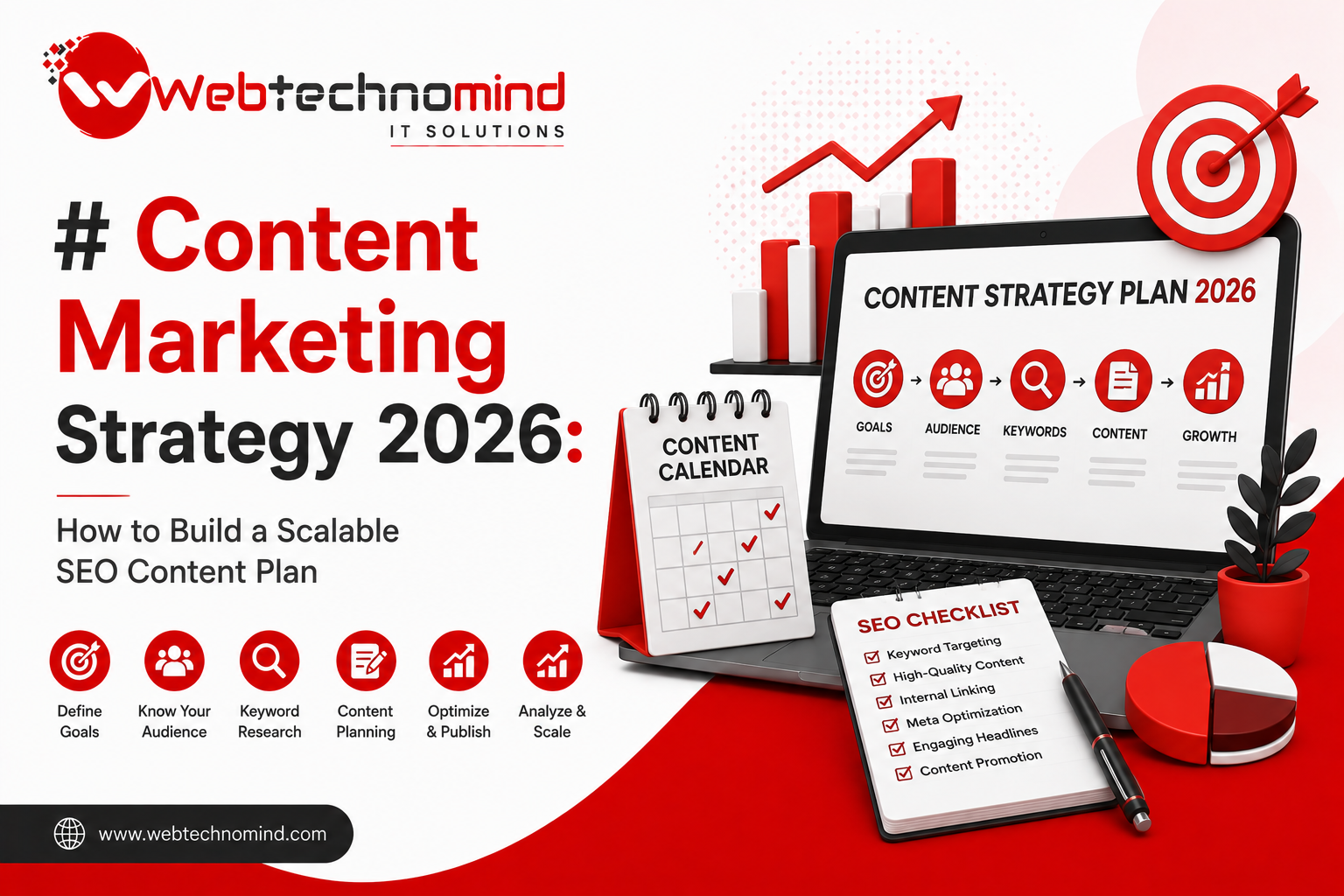
Create a repeatable workflow such as:
Research → Brief → Draft → Expert Review → SEO Optimization → Editing → Publishing → Internal Linking → Performance Tracking → Updating
This makes content production more predictable.
You can also use AI tools to accelerate research, outlining, content analysis, keyword grouping, and repetitive tasks. However, human review should remain an important part of the process.
AI can help increase efficiency, but your strategy, expertise, brand voice, and final quality control should remain human-led.
Internal links help users discover related information and help search engines understand relationships between pages.
Whenever you publish a new article, identify relevant existing pages that should link to it.
For example, an article about “Google Ads vs Meta Ads” could link to:
Likewise, those pages can link back to relevant supporting content.
Think of your website as an interconnected knowledge system rather than a collection of independent articles.
A scalable content calendar should include different content types.
A practical monthly mix could include:
The exact frequency depends on your resources and industry.
Quality and strategic relevance are more important than publishing volume.
Traffic is useful, but it should not be your only KPI.
Track metrics such as:
Also identify which content generates business results.
A page receiving 1,000 visitors but generating no leads may be less valuable than a page receiving 100 highly relevant visitors that produces five qualified inquiries.
Content marketing is not simply a publishing process. It is also an optimization process.
Review older content regularly and look for:
Refreshing existing content can often be more efficient than continuously creating new pages.
The biggest advantage of a scalable SEO content strategy is compounding growth.
One article may generate traffic for months or years. A well-structured topic cluster can attract visitors across dozens of related searches. As your website accumulates useful content, internal relationships and topical coverage become stronger.
The goal is therefore not to “go viral” with every article.
The goal is to build a reliable content engine that continuously attracts, educates, and converts your target audience.
A successful Content Marketing Strategy 2026 requires a shift from content volume to content value.
Businesses should focus on understanding their audiences, mapping search intent, developing topic clusters, creating expert-driven resources, optimizing for traditional and AI-powered search, and continuously improving existing content.
The most scalable approach is to create a repeatable system:
Research the right topics → Create genuinely useful content → Connect related pages → Optimize for search and users → Measure business impact → Update and improve.
When this process is applied consistently, content marketing becomes more than a source of website traffic. It becomes a long-term growth asset that can increase visibility, establish authority, generate qualified leads, and support business growth throughout 2026 and beyond.
Read More


Introduction Publishing content consistently is one of the most effective ways to build long-term organic visibility. However, simply...
Introduction Blogging is no longer just a way for businesses to share company updates or industry opinions. When...
Old content can be one of the most valuable assets on a website. A blog post that once...
Search engine optimization is no longer just about inserting keywords into a webpage and building backlinks. Google increasingly...