Google E-E-A-T Explained: How to Build Trust, Authority & Improve SEO Rankings
- By admin
- Sep 01, 2026








Search engine optimization is no longer just about inserting keywords into a webpage and building backlinks. Google increasingly focuses on whether content is genuinely useful, reliable, and created by people or organizations with appropriate knowledge and experience.
This is where Google E-E-A-T becomes important.
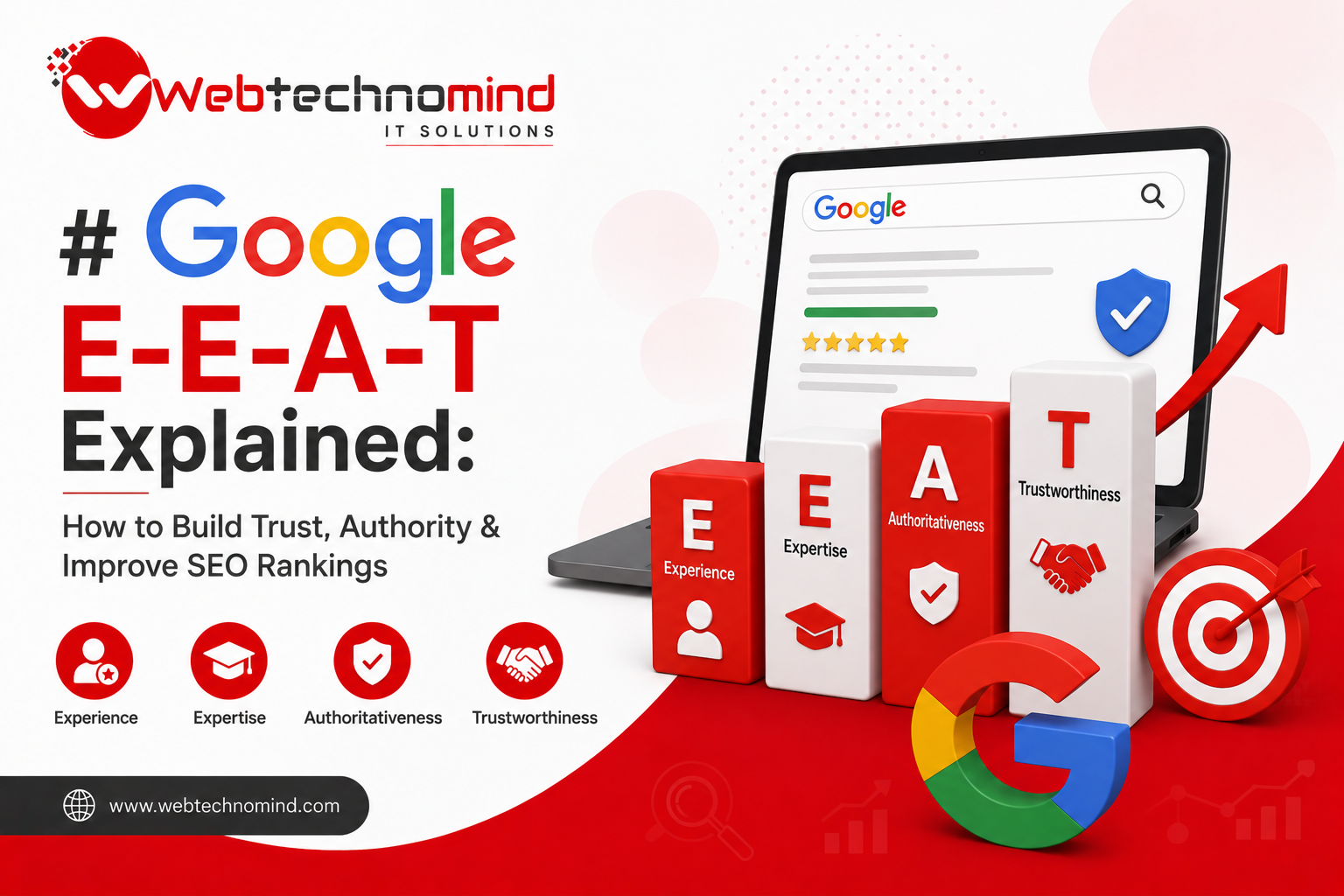
E-E-A-T stands for Experience, Expertise, Authoritativeness, and Trustworthiness. These principles help explain the qualities Google looks for when evaluating the overall quality and reliability of content.
While E-E-A-T is not a single technical ranking factor that you can simply optimize with a checklist, it provides an important framework for creating content that deserves visibility in search results.
Let’s explore what E-E-A-T means and how businesses can use it to build stronger websites, improve credibility, and support long-term SEO performance.
E-E-A-T stands for:
Google’s quality evaluation guidelines use these concepts to help human quality raters assess the quality of search results.
The additional “E” for Experience is especially important because first-hand knowledge can make content more useful and authentic.
For example, an article about choosing a business software platform becomes more valuable when it includes practical experience, real testing, screenshots, limitations, and lessons learned rather than simply repeating information found on other websites.
Modern search users expect more than generic information. They want answers they can trust.
Imagine searching for information about financial planning, medical topics, cybersecurity, software, or legal services. Would you trust an anonymous article with no author information, sources, or evidence? Probably not.
Google also has a strong interest in presenting reliable information, particularly for topics that can significantly affect people’s health, finances, safety, or well-being.
Strong E-E-A-T can help a website demonstrate that its content deserves users’ attention.
It can also strengthen other aspects of SEO indirectly. High-quality, trustworthy content is more likely to earn links, mentions, shares, engagement, repeat visitors, and brand recognition.
Experience is about demonstrating first-hand knowledge.
Instead of producing generic content, explain what you have actually done, tested, observed, or learned.
For example, a digital marketing agency writing about Google Ads could include:
This makes the content more authentic.
Where appropriate, use original screenshots, case studies, photographs, data, examples, and results to demonstrate real-world experience.
The goal is simple: don’t just tell readers what something is—show that you understand how it works in practice.
Expertise means showing that your content is created with appropriate knowledge.
This does not mean every article needs an academic degree or a long list of certifications. The level of expertise should match the topic.
A technical article should provide technically accurate explanations. A business article should offer meaningful strategic insights. A professional service page should clearly explain the organization’s capabilities.
You can demonstrate expertise by:
Avoid writing simply to increase word count. A well-researched 800-word article can be more valuable than a repetitive 2,000-word article.
Authority develops over time.
A website becomes more authoritative when other reputable websites, organizations, professionals, and users recognize it as a valuable source.
One of the strongest ways to establish authority is by consistently publishing high-quality content around a specific subject.
For example, a company specializing in cybersecurity can build topical authority by publishing useful resources about:
Author pages can also help establish credibility. Include relevant information about the writer’s professional background, experience, qualifications, and areas of specialization when appropriate.
Brand mentions, quality backlinks, industry publications, expert contributions, and genuine customer reviews can also strengthen a site’s overall reputation.
Among the four components, Trustworthiness is particularly important.
A website should make it easy for visitors to understand who operates it and how the information can be trusted.
Important trust signals can include:
For businesses, displaying real company information can make a significant difference.
Avoid misleading claims, fake reviews, exaggerated promises, copied content, and unclear authorship. These practices can damage both user trust and brand reputation.
The growth of generative AI has made E-E-A-T even more relevant.
AI can help businesses research topics, generate ideas, structure content, and improve productivity. However, simply publishing automatically generated articles at scale does not guarantee quality or search visibility.
AI-generated content should be reviewed, fact-checked, edited, and improved by people who understand the subject.
Human expertise adds something AI alone cannot guarantee: real-world context.
For example, an AI tool can explain how a marketing campaign works, but an experienced marketer can explain what happened during an actual campaign, why a strategy failed, how the budget was adjusted, and what lessons were learned.
That difference can make content substantially more useful.
Improving E-E-A-T does not require completely rebuilding your website.
Start with these practical steps:
Add meaningful author information to important articles. Explain the person’s experience, qualifications, professional background, and area of expertise.
Don’t simply rewrite information that already exists. Add your own analysis, examples, data, opinions, experiments, or case studies.
Review older articles regularly. Remove outdated information, correct inaccuracies, update statistics, and improve sections that no longer provide enough value.
Your About page should clearly explain who you are, what your organization does, your experience, and why visitors should trust you.
Focus on earning links from relevant and reputable websites rather than pursuing large numbers of low-quality links.
Case studies, customer results, testimonials, original research, product demonstrations, and practical examples can make content more credible.
Make it easy for visitors to find contact details, policies, business information, and other important trust signals.
One common mistake is treating E-E-A-T as another technical SEO checklist.
It isn’t.
The underlying goal is to create content that users can confidently rely on.
Ask yourself:
Would a real expert be comfortable putting their name behind this article?
If the answer is yes, you’re moving in the right direction.
Your content should demonstrate knowledge, experience, honesty, and genuine concern for the reader rather than simply attempting to manipulate search rankings.
Google E-E-A-T has become an important concept for businesses that want to build sustainable search visibility.
Experience helps demonstrate that you understand the subject in the real world. Expertise shows that you know what you’re talking about. Authoritativeness establishes your reputation. Trustworthiness gives users confidence in your website and information.
The strongest SEO strategy combines all four.
Instead of asking, “How can I create content that ranks?”, ask a better question:
“How can I create the most useful and trustworthy resource for my audience?”
That shift in mindset can help you create stronger content, build a more credible brand, attract quality links, improve user confidence, and support long-term SEO growth.
In 2026, successful SEO is increasingly about more than visibility. It is about earning trust once someone discovers you.
Read More



Introduction Publishing content consistently is one of the most effective ways to build long-term organic visibility. However, simply...

Content marketing has changed significantly. Publishing a few keyword-focused blog posts every month is no longer enough to...
Introduction Blogging is no longer just a way for businesses to share company updates or industry opinions. When...
Old content can be one of the most valuable assets on a website. A blog post that once...