AI-Powered App Development: Complete Guide for Modern Businesses
- By admin
- Aug 18, 2026

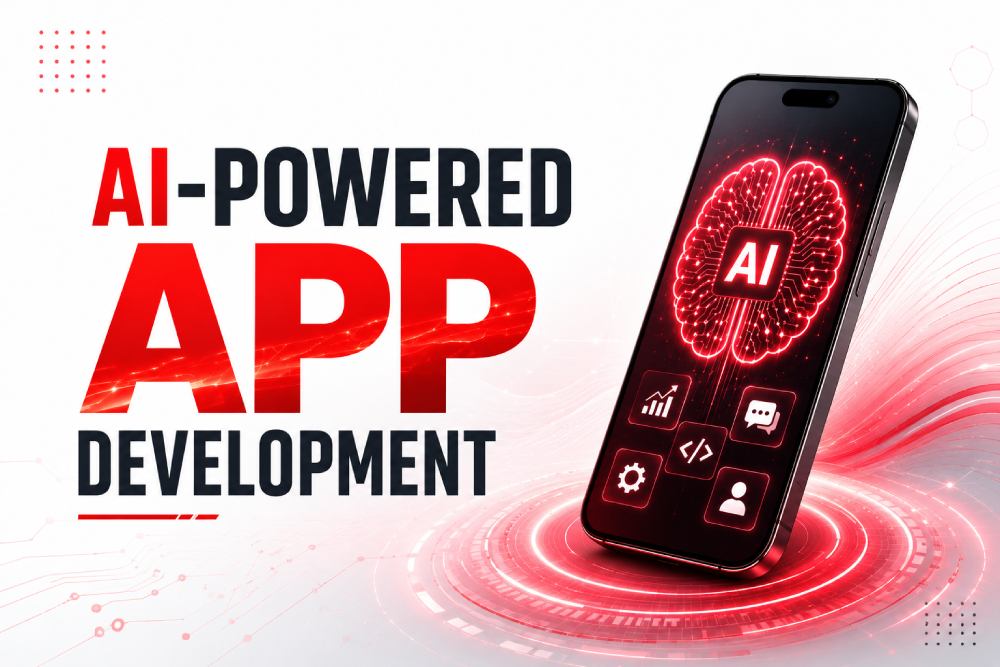







Artificial intelligence is transforming the way businesses build, launch, and improve mobile and web applications. From personalized recommendations and intelligent chatbots to predictive analytics and automated workflows, AI-powered app development is helping businesses create smarter digital products and deliver better customer experiences.
For modern businesses, integrating AI into an application is no longer limited to large enterprises. Startups, SMEs, eCommerce businesses, healthcare companies, financial services, education providers, and other industries can use AI to automate processes, understand users, and make data-driven decisions.
This complete guide explains what AI-powered app development is, its benefits, key technologies, development process, and why businesses should consider AI integration.
AI-powered app development refers to the process of creating mobile or web applications that use artificial intelligence and machine learning technologies to perform intelligent tasks.
Unlike traditional applications that depend mainly on predefined rules, AI-powered applications can analyze data, identify patterns, generate content, make predictions, and improve their performance based on user interactions.
Common AI capabilities include:
AI can turn a standard application into an intelligent business platform. Here are some of the biggest advantages.
AI can analyze user behavior and provide personalized recommendations, responses, and experiences. For example, an eCommerce application can recommend products based on browsing history and previous purchases.
AI-powered applications can automate repetitive tasks such as customer support, data processing, lead qualification, document analysis, and reporting. This reduces manual work and allows teams to focus on higher-value activities.
Modern businesses generate large amounts of data. AI can process this information quickly and identify trends, opportunities, and potential problems, helping management make better decisions.
AI chatbots and virtual assistants can answer common customer questions at any time. Businesses can provide faster support while reducing the workload on customer service teams.
AI can optimize workflows, identify inefficiencies, predict demand, and automate internal processes. This can help businesses reduce operational costs and improve productivity.
Different AI technologies can be integrated depending on the application’s objectives.
Machine learning allows applications to learn from historical data and make predictions or recommendations. It is commonly used for customer segmentation, fraud detection, demand forecasting, and recommendation systems.
Natural Language Processing (NLP) enables applications to understand and process human language. It can power chatbots, AI assistants, sentiment analysis, voice interfaces, and intelligent search.
Generative AI can create text, images, summaries, code, product descriptions, and other content. Businesses can integrate generative AI into applications to improve productivity and automate content-related tasks.
Computer vision allows applications to understand images and visual information. It can be used for facial recognition, document processing, object detection, quality inspection, and visual search.
AI agents can perform multi-step tasks based on business rules, user instructions, and available tools. They can help automate workflows such as lead management, customer support, research, scheduling, and internal operations.
Building an intelligent application requires more than simply adding an AI API. A structured development process is essential.
Start by identifying the business problem you want AI to solve. Clearly define your target users, desired outcomes, and measurable goals.
Not every application needs multiple AI features. Select use cases that can deliver measurable value, such as automated customer support, recommendations, forecasting, or intelligent document processing.
The technology stack depends on the application’s requirements. Popular technologies may include React, Next.js, Node.js, Laravel, Python, Flutter, React Native, PostgreSQL, MongoDB, cloud platforms, and AI APIs.
AI systems depend heavily on quality data. Businesses need to collect, clean, structure, secure, and manage relevant data before using it for AI-powered functionality.
Develop the user interface, backend, APIs, database, authentication, AI functionality, and business logic. AI should be integrated into the overall product architecture rather than treated as an isolated feature.
Test the application for functionality, performance, security, accuracy, scalability, and user experience. AI outputs should also be evaluated continuously.
After deployment, monitor application performance, AI responses, usage patterns, costs, and security. Continuous improvement is important because AI-powered applications often evolve based on real-world usage.
Businesses can use AI across different industries and use cases:
The cost of AI app development depends on factors such as application complexity, number of platforms, AI features, integrations, data requirements, UI/UX complexity, security requirements, and development timeline.
A basic AI-enabled application may require a significantly smaller investment than a large enterprise platform with custom machine learning models, AI agents, multiple integrations, and advanced analytics.
Businesses should therefore define the MVP first and gradually introduce advanced AI capabilities based on user demand and ROI.
AI offers significant opportunities, but businesses should also consider:
A strong architecture, secure data practices, proper testing, and human oversight can help reduce these risks.
AI-powered applications are moving from simple chatbots toward intelligent systems capable of understanding context, making decisions, and completing complex workflows.
Businesses that adopt AI strategically can improve customer engagement, automate operations, and create new digital products. The key is not to add AI simply because it is trending, but to use it where it creates measurable business value.
AI-powered app development is becoming an important competitive advantage for modern businesses. By combining mobile or web application development with machine learning, generative AI, NLP, computer vision, and AI agents, businesses can build smarter and more efficient digital experiences.
Whether you are planning an AI MVP, upgrading an existing application, or building an enterprise-grade AI platform, the right strategy, technology stack, development team, and implementation roadmap are essential.
At WebTechnoMind, businesses can leverage AI, web, and mobile development expertise to transform ideas into scalable digital products designed around real business goals.
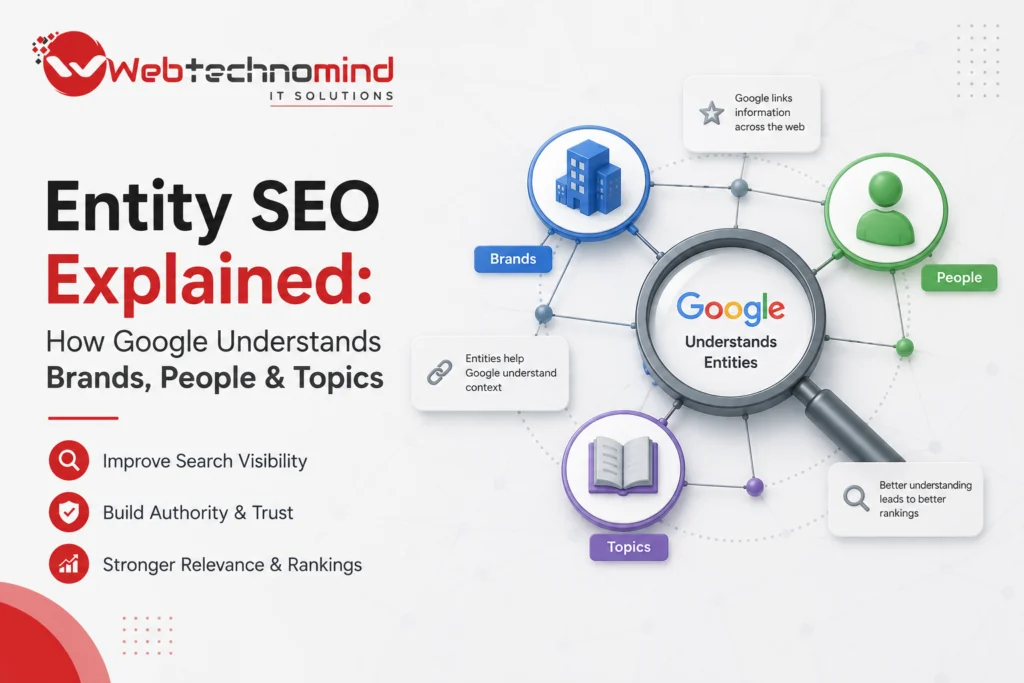
Search engines have changed significantly over the years. Earlier, Google primarily matched keywords on a webpage with the...

The way people search for information is changing rapidly. Traditional search engines are no longer the only way...
Search is evolving. People are no longer relying only on traditional search engines to find information, products, and...
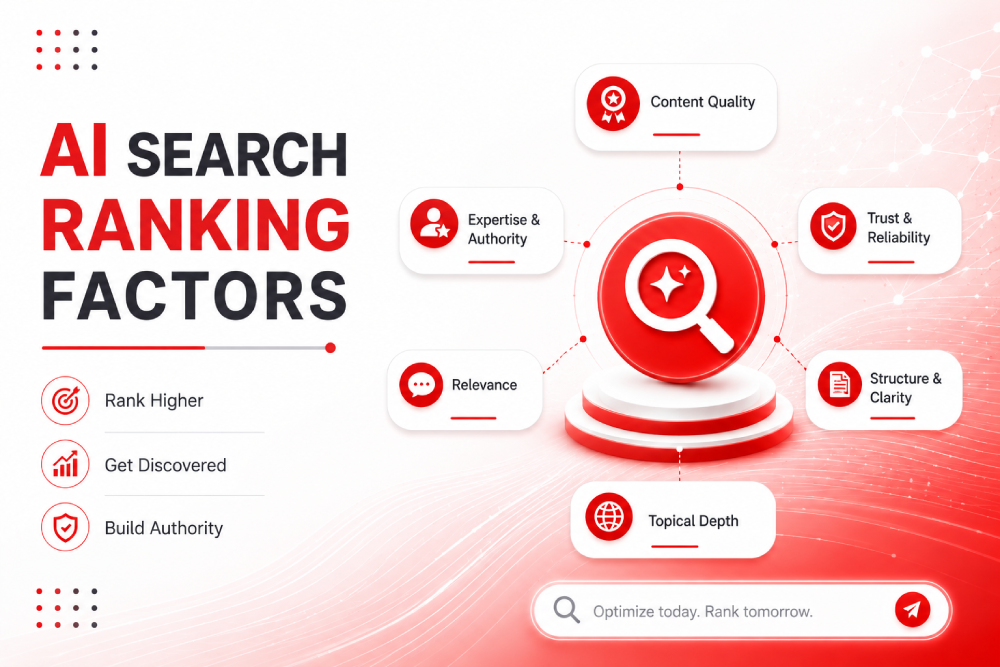
Search is evolving from traditional keyword-based results to AI-powered experiences. Platforms such as Google AI Overviews, Google AI...