







The way people search for information is changing rapidly. Traditional search engines are no longer the only way users discover websites, businesses, products, and services. AI-powered platforms are increasingly becoming part of the search and research process.
Among the major AI platforms, Claude by Anthropic has become an important tool for research, content discovery, analysis, and information retrieval.
This creates a new opportunity for businesses: optimizing their digital presence so their content can be discovered, understood, and potentially referenced by AI systems.
This guide explains Claude AI SEO, how AI search differs from traditional SEO, and the practical steps businesses can take to improve their visibility in Claude-powered search experiences.
Claude AI SEO refers to the process of optimizing a website, content, and overall digital presence so that Claude and other AI-powered systems can more effectively understand and potentially use information from the brand.
Unlike traditional SEO, which primarily focuses on ranking webpages for specific keywords, AI SEO focuses more heavily on:
It is important to understand that there is no guaranteed formula for making a website appear in Claude responses. AI systems can use different retrieval methods, sources, models, and ranking signals.
Therefore, the objective should be to build a strong, authoritative, machine-readable digital presence rather than trying to manipulate a specific AI system.
Traditional search typically matches a user’s query with webpages and ranks results based on numerous signals.
AI-powered search can work differently. Instead of simply displaying ten blue links, an AI system may interpret the user’s question, retrieve relevant information, analyze multiple sources, and generate a conversational response.
For example, a traditional search might involve:
“Best CRM software for small businesses.”
An AI-oriented query could be:
“What CRM should a growing small business choose if it needs automation, lead management, and affordable pricing?”
The second query requires deeper understanding of context and intent.
This means businesses should move beyond keyword targeting and create content that provides complete, clear, and trustworthy answers.
AI search can influence how users discover brands before they ever visit a company’s website.
A potential customer may ask an AI assistant to:
If your company has a strong digital presence, useful content, authoritative mentions, and consistent information, it has a better foundation for being understood and potentially surfaced by AI systems.
Claude AI SEO should therefore be viewed as part of a broader AI search optimization strategy.
Although Anthropic does not provide a public checklist guaranteeing that a website will be recommended by Claude, several optimization principles are highly relevant to AI search.
The foundation of AI visibility is useful information.
Avoid writing articles simply to target keywords. Instead, answer the questions your customers genuinely have.
For example, instead of creating a generic article titled “CRM Software,” develop content covering:
Comprehensive content gives AI systems more context about your subject.
People communicate with AI differently from traditional search engines.
Instead of focusing exclusively on short keywords, create content around complete questions.
Examples include:
Use question-based headings and provide direct answers before expanding on the topic.
One article rarely establishes expertise.
Create a connected collection of content covering your primary industry.
For example, an SEO agency could create content around:
This creates a deeper topical footprint and helps establish your website as a knowledgeable source.
AI search increasingly rewards useful and trustworthy information.
Make your content more credible by including:
For commercial websites, clearly explain your experience, services, processes, and areas of specialization.
AI systems need to understand entities such as businesses, people, products, and services.
Make sure your company information is consistent across your digital presence.
Important information includes:
Avoid using significantly different descriptions of your company across different platforms.
AI systems need to identify useful information efficiently.
Make your content easy to understand by using:
For example, if you’re explaining “What is GEO?”, start the section with a concise definition and then provide supporting details.
This structure benefits both users and search technologies.
AI search optimization does not eliminate traditional technical SEO.
Your website should have:
A technically weak website can make it harder for search systems to understand and access your content.
Structured data helps machines interpret important information about webpages and entities.
Depending on your website, relevant structured data may include:
Structured data should accurately represent the visible information on the page and should never be used to provide misleading information.
You do not necessarily need to create hundreds of new pages.
Start by auditing your existing content.
For each important page, ask:
Does this page answer a real user question?
Is the information accurate and current?
Does the page demonstrate genuine expertise?
Is the content clearly structured?
Does the page explain important concepts instead of simply repeating keywords?
Can a reader quickly identify the main answer?
Improve weak pages by adding examples, explanations, original insights, FAQs, and relevant supporting information.
A strong content strategy can follow a simple framework:
Research questions customers ask before purchasing your product or service.
Create topic clusters rather than isolated articles.
Develop authoritative pages that provide detailed answers.
Publish related articles that answer specific subtopics.
Include experience, data, examples, and original insights.
Review important content regularly, particularly in fast-changing industries.
Businesses should avoid treating AI SEO as a shortcut.
Common mistakes include:
AI-generated content can be useful as a productivity tool, but the final content should provide accuracy, originality, expertise, and genuine value.
Claude AI SEO is best considered part of the broader Generative Engine Optimization (GEO) landscape.
GEO focuses on improving the likelihood that content and brands are understood and surfaced within generative search experiences.
The same core principles apply:
Useful Content + Strong Authority + Clear Structure + Technical SEO + Entity Consistency + Trust = Stronger AI Search Foundation
No strategy can guarantee that an AI platform will cite or recommend a particular website. However, these practices improve the overall quality and discoverability of your digital presence.
Claude AI SEO represents an important evolution in how businesses should approach search visibility.
The goal is not simply to rank for a keyword. Businesses need to become credible sources of information that can be easily understood by both people and AI systems.
Focus on creating authoritative content, answering natural-language questions, demonstrating real expertise, maintaining consistent brand information, improving technical SEO, and building a strong topical presence.
As AI-powered search continues to evolve, businesses that invest in SEO, GEO, content quality, and digital authority will be better positioned to remain visible in the next generation of search.
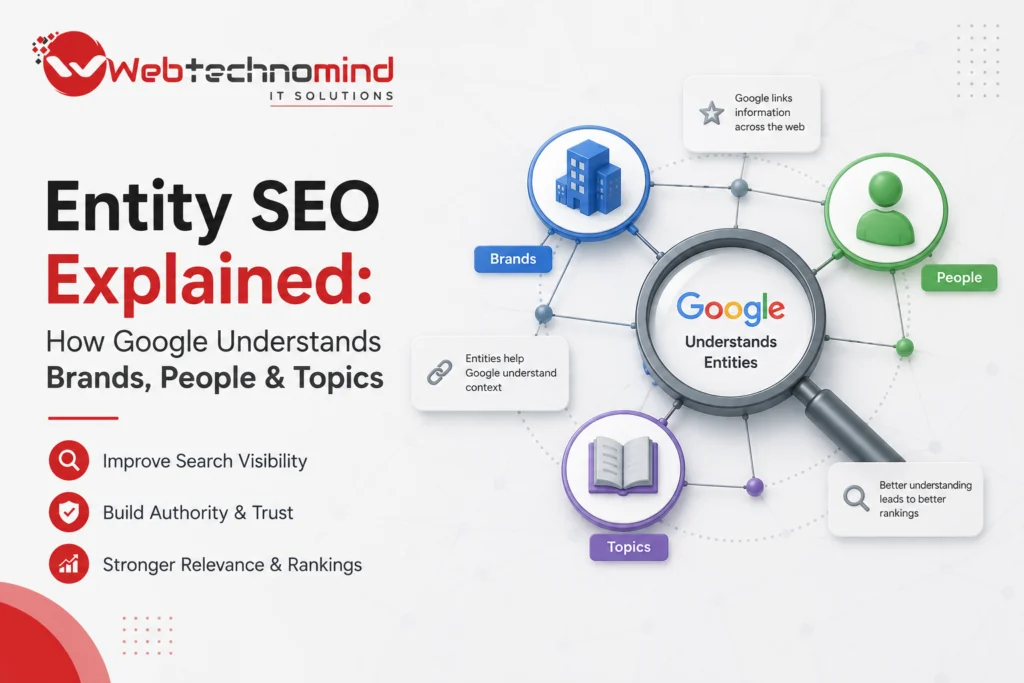
Search engines have changed significantly over the years. Earlier, Google primarily matched keywords on a webpage with the...

Search is evolving. People are no longer relying only on traditional search engines to find information, products, and...
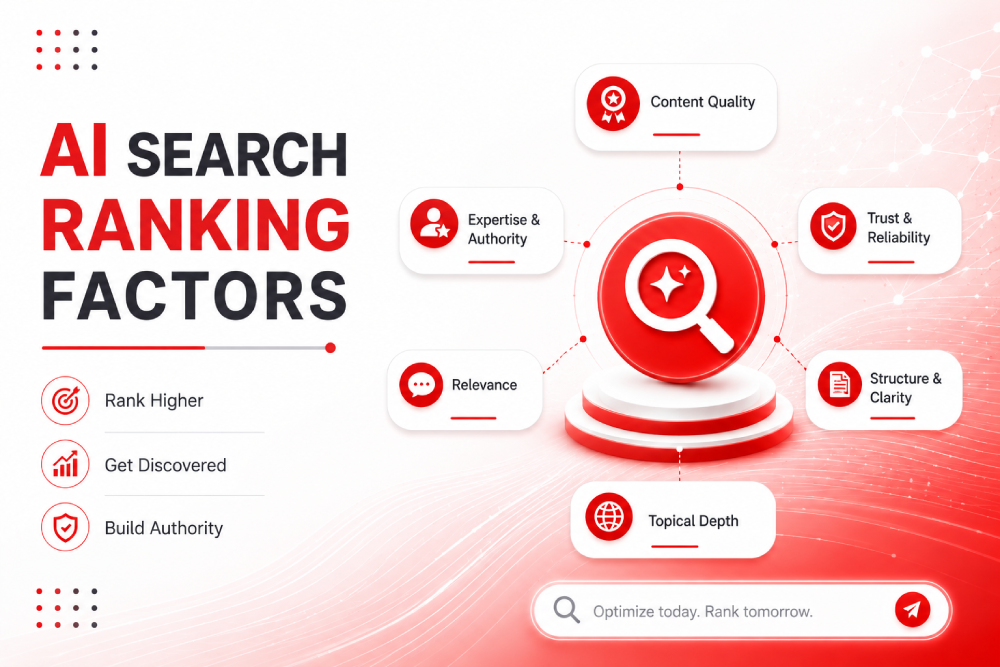
Search is evolving from traditional keyword-based results to AI-powered experiences. Platforms such as Google AI Overviews, Google AI...
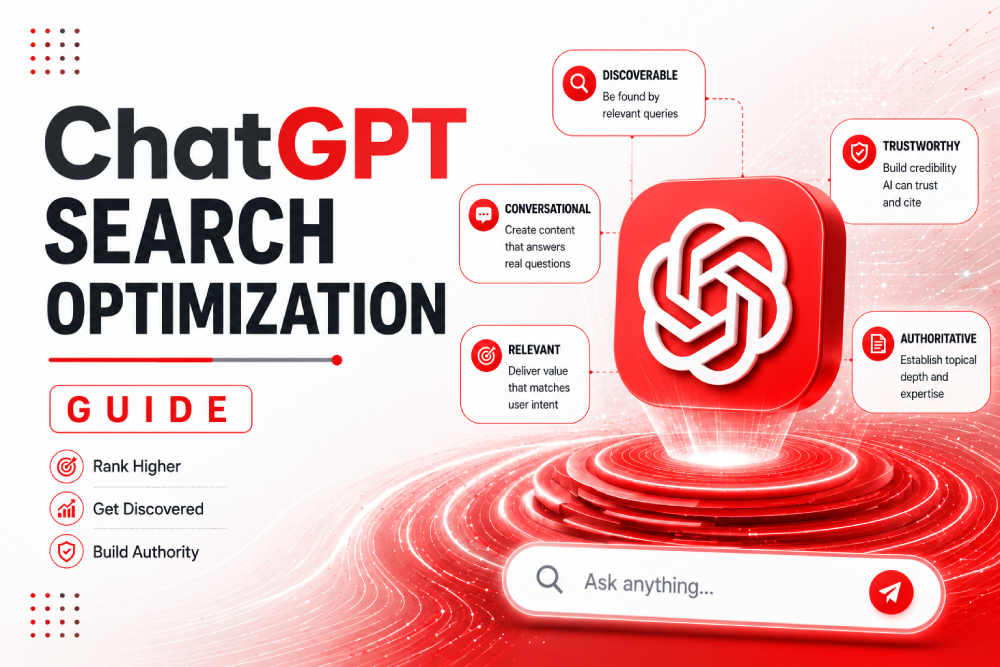
Search is no longer limited to traditional search engines. People are increasingly using AI-powered tools such as ChatGPT...