Google Search Ads Guide 2026: How to Create High-Converting Campaigns That Generate Leads
- By admin
- Aug 18, 2026







Google Search Ads remain one of the most effective ways for businesses to reach people who are actively searching for products and services.
Unlike many advertising channels that interrupt users while they browse content, Search Ads can appear when someone already has a specific need or commercial intent.
However, simply launching a Google Ads campaign does not guarantee leads. Rising competition, changing search behavior, increasing automation, and higher advertising costs mean businesses need a more strategic approach to paid search in 2026.
A successful campaign requires the right combination of keyword targeting, compelling ad copy, landing page optimization, conversion tracking, bidding strategy, audience signals, and continuous optimization.
This Google Search Ads guide explains how to create campaigns designed to generate high-quality leads while controlling advertising costs.
Google Search Ads are paid advertisements that can appear when users search for specific terms related to a business, product, or service.
For example, a user searching for:
“best web development company in Kolkata”
may see relevant paid advertisements before or alongside organic search results.
Businesses typically pay based on interactions such as clicks, depending on the campaign and bidding setup.
The key advantage of Search Ads is high purchase intent. Someone actively searching for a solution can be closer to making a purchasing decision than someone who simply sees a social media advertisement.
Paid search continues to be valuable because it connects businesses with users at moments of active intent.
A well-optimized campaign can help businesses:
However, the focus should no longer be simply on generating clicks.
In 2026, businesses should prioritize qualified conversions and profitable customer acquisition.
Before creating a campaign, establish exactly what you want to achieve.
Common objectives include:
For a service-based business, for example, the primary conversion might be a qualified enquiry rather than a website visit.
A clearly defined goal makes it easier to select keywords, bidding strategies, ad messaging, and landing pages.
Keyword research is one of the most important parts of Search Ads.
Do not target every keyword related to your business. Focus on searches that indicate meaningful intent.
For example, an IT company may target:
These keywords generally indicate stronger commercial intent than broad informational searches.
Classify keywords according to intent:
Informational:
“How does website development work?”
Commercial:
“Best website development company”
Transactional:
“Website development services”
Navigational:
“Company name website”
For lead generation, commercial and transactional keywords often deserve greater attention.
Google Ads provides different keyword matching options that influence which searches can trigger advertisements.
Use keyword targeting carefully and monitor actual search terms.
Broad targeting can help discover additional relevant searches, particularly when supported by strong conversion data and appropriate controls. However, it can also introduce irrelevant traffic if campaigns are poorly managed.
Regularly review search term data and add irrelevant queries as negative keywords where appropriate.
Negative keywords prevent advertisements from appearing for searches that are unlikely to generate valuable leads.
For example, a premium software development agency might exclude searches containing terms such as:
The exact negative keyword list depends on the business and its target audience.
A strong negative keyword strategy can reduce wasted spending and improve traffic quality.
Your advertisement needs to quickly communicate why a user should choose your business.
Effective Search Ads should focus on:
For example:
Headline: Custom Software Development Services
Headline: Build Scalable Business Applications
Headline: Get a Free Project Consultation
The messaging should closely match the user’s search intent.
Avoid making unrealistic claims. Instead, communicate specific and verifiable benefits.
One of the most common Google Ads mistakes is sending every visitor to the homepage.
A user searching for “React Native app development services” should ideally land on a page specifically focused on React Native development.
The landing page should:
Better message alignment can improve the overall user experience and conversion potential.
You cannot effectively optimize what you cannot measure.
Track meaningful actions such as:
Avoid treating every website interaction as a conversion.
For lead-generation campaigns, distinguish between a basic enquiry and a qualified lead whenever possible.
The more accurate your conversion data, the better your campaign optimization can become.
Google Ads offers automated bidding options designed around different objectives.
Your strategy should depend on campaign maturity, conversion volume, business goals, and available data.
For lead generation, businesses may consider strategies focused on:
Do not change bidding strategies constantly. Allow sufficient data to accumulate before making major decisions, unless there is a clear performance or tracking issue.
Campaign performance is influenced by how closely your keywords, ads, and landing pages align with user intent.
Improve relevance by creating a logical relationship:
Keyword → Ad → Landing Page → Conversion
For example:
Keyword: SEO services for small business
Ad: SEO Services for Small Businesses
Landing Page: Small Business SEO Services
This creates a consistent user journey.
Generating 100 leads is not necessarily better than generating 30 leads.
If most of those 100 leads are irrelevant, the campaign may actually be less profitable.
Measure:
Cost Per Lead (CPL)
and, more importantly:
Cost Per Qualified Lead
You should also track:
This helps shift campaign optimization from simple traffic generation toward actual business outcomes.
Regularly review the following areas:
Businesses often waste advertising budgets because of basic campaign mistakes.
Avoid:
A successful Google Ads campaign requires continuous analysis rather than a “set it and forget it” approach.
A strong lead-generation funnel can follow this structure:
Search Query → Relevant Ad → Optimized Landing Page → Lead Form/Call → Qualification → Sales Follow-Up
Every stage matters.
Even a highly optimized advertisement cannot compensate for a poor landing page or slow sales response.
Businesses should therefore treat Google Ads as part of a complete acquisition system rather than an isolated advertising channel.
Google Search Ads remain a powerful lead-generation channel in 2026, but successful campaigns require much more than selecting keywords and increasing budgets.
The strongest campaigns combine high-intent targeting, relevant advertisements, optimized landing pages, accurate conversion tracking, intelligent bidding, negative keyword management, and continuous performance analysis.
Most importantly, optimize for business results rather than vanity metrics.
Clicks, impressions, and traffic are useful indicators, but qualified leads, customers, revenue, and customer acquisition costs ultimately determine whether your Google Ads investment is successful.
By building campaigns around search intent and continuously improving every stage of the conversion journey, businesses can create Google Search Ads campaigns that generate more relevant leads and produce stronger long-term advertising performance.
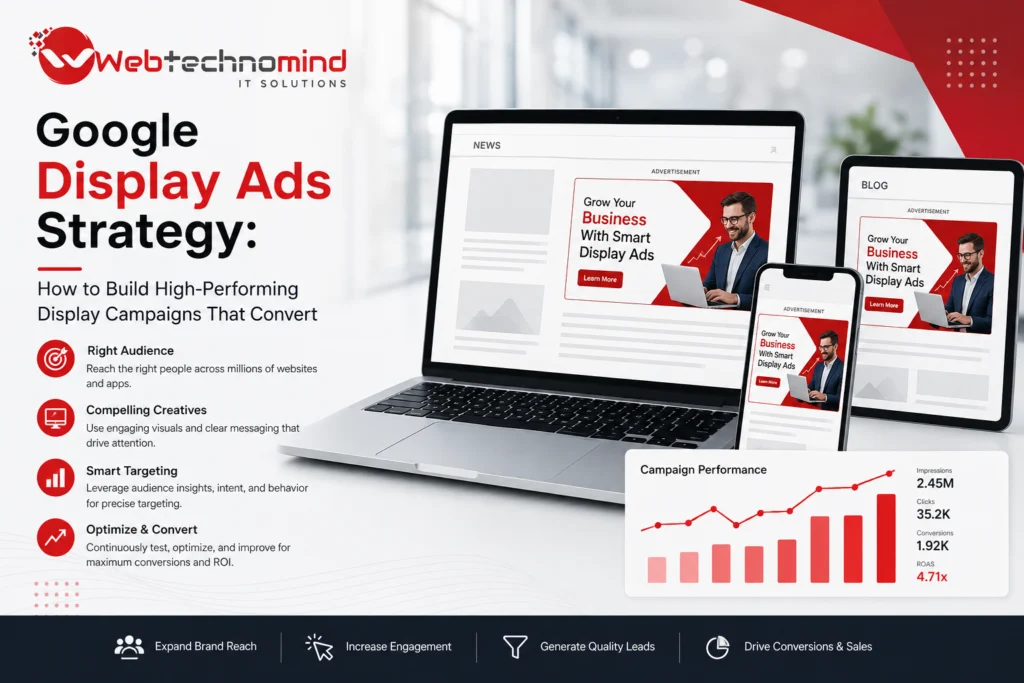
Google Display Ads can help businesses reach potential customers across websites, apps, video platforms, and other digital environments....
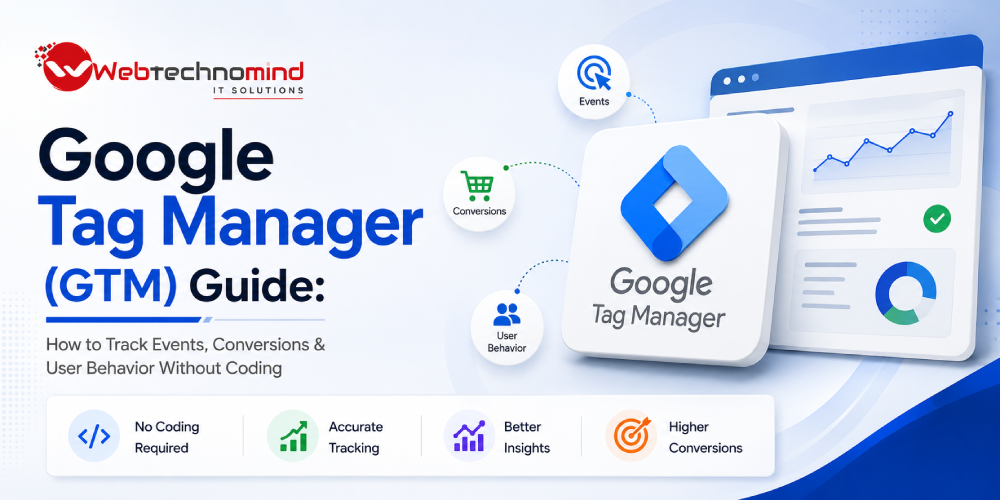
Modern websites often use multiple tracking and marketing technologies. Businesses may need to measure website visits, button clicks,...
Understanding how visitors interact with your website is essential for making better marketing and business decisions. While website...
Running Google Ads without accurate conversion tracking is like running a business without knowing which sales activities generate...