Social Media Marketing Strategy 2026: Complete Guide to Growing Your Business Online
- By admin
- Sep 01, 2026
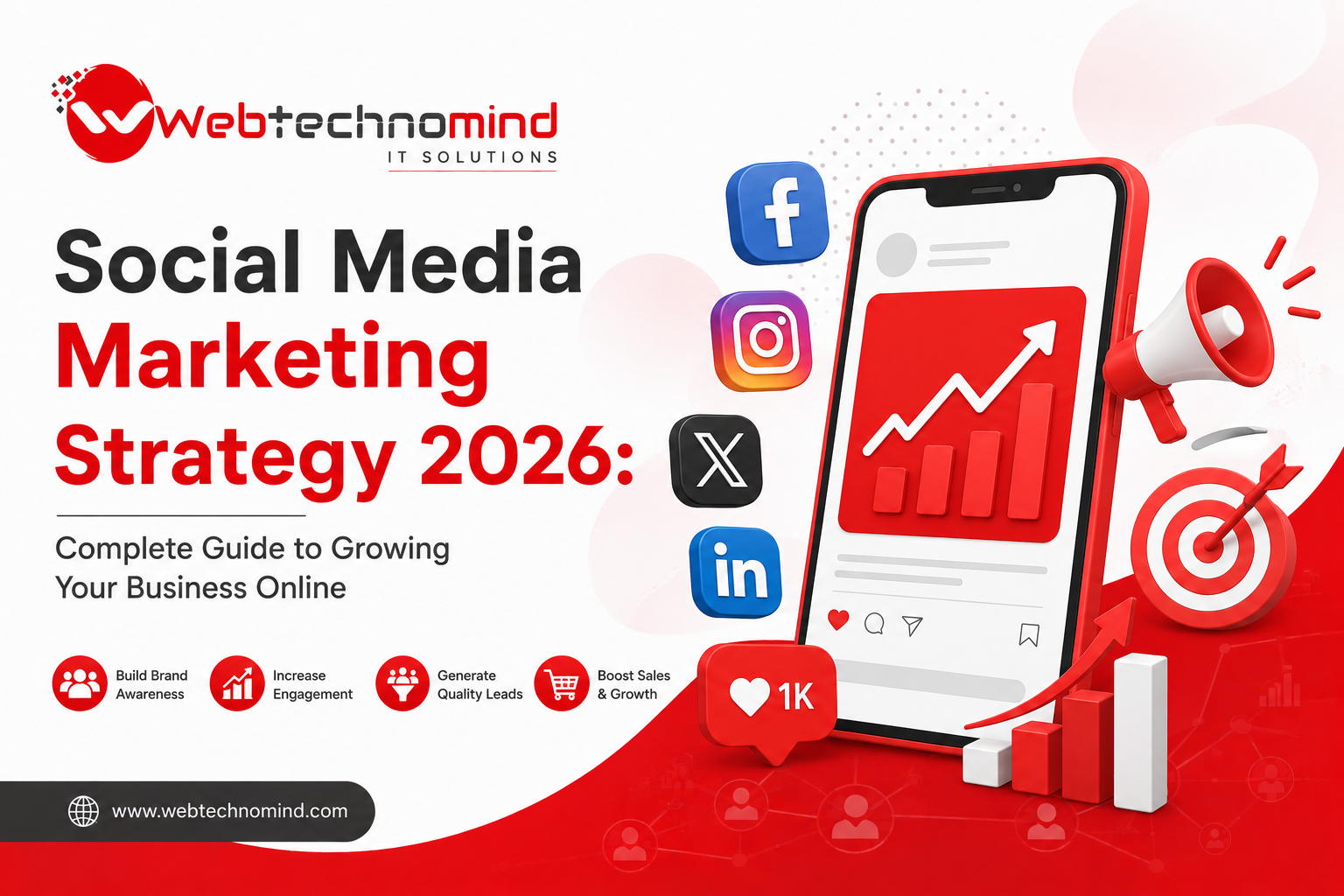







Social media has become one of the most powerful channels for businesses that want to build visibility, connect with customers, generate leads, and increase sales. But in 2026, simply posting regularly is no longer enough. Businesses need a clear social media marketing strategy that combines valuable content, audience research, short-form video, community engagement, paid advertising, analytics, and AI-powered optimization.
Whether you run a startup, eCommerce store, local business, professional service company, or established brand, the right strategy can turn social platforms into a consistent growth channel.
This complete guide explains how to build an effective social media marketing strategy in 2026 and use it to grow your business online.
A social media marketing strategy is a structured plan for using platforms such as Facebook, Instagram, LinkedIn, YouTube, TikTok, and other relevant channels to achieve specific business goals.
Instead of publishing random posts, a strategic approach connects every activity with a measurable objective.
A strong strategy typically includes:
The goal is not simply to collect followers. The real objective is to turn social media attention into brand awareness, engagement, leads, customers, and revenue.
Consumer behavior continues to evolve. People increasingly discover brands, research products, compare businesses, watch reviews, and communicate with companies through social platforms.
This makes social media an important part of the modern customer journey.
For businesses, social media can help:
Increase brand awareness: Consistent content keeps your business visible to potential customers.
Generate qualified leads: Strategic content and paid campaigns can bring prospects directly into your sales funnel.
Build customer trust: Educational content, reviews, case studies, behind-the-scenes posts, and real customer experiences make a brand more credible.
Drive website traffic: Social content can encourage users to visit landing pages, product pages, blogs, and service pages.
Improve customer relationships: Social platforms provide an opportunity to communicate directly with customers and respond to their questions.
Before creating content, determine what you want social media to accomplish.
Different businesses may have different objectives. For example:
Your goals should be specific and measurable.
For example, instead of saying, “We want more engagement,” create a measurable goal such as, “Increase average engagement by 25% over the next six months.”
This makes it easier to evaluate your social media performance and adjust your strategy.
Successful social media marketing starts with understanding the people you want to reach.
Research your audience’s:
Create detailed customer personas and use them to guide your content strategy.
For example, a B2B software company may focus heavily on LinkedIn, while a fashion brand may prioritize Instagram, TikTok, and short-form video.
The key is to go where your audience already spends time rather than trying to maintain every social media account.
You do not need to be active on every platform.
In 2026, businesses should focus on platforms that align with their audience, industry, content format, and marketing goals.
LinkedIn is particularly valuable for B2B companies, consultants, technology businesses, recruiters, and professional service providers.
Content can include:
Instagram remains useful for brands that benefit from visual storytelling.
Reels, carousels, Stories, product demonstrations, testimonials, and behind-the-scenes content can all contribute to brand growth.
YouTube is ideal for long-form educational content, tutorials, product demonstrations, interviews, reviews, and expert content.
Facebook can still be valuable for community building, local businesses, groups, remarketing, and paid advertising.
TikTok is particularly useful for short-form, entertaining, educational, and personality-driven content aimed at audiences that actively consume short videos.
The best platform combination depends on your audience rather than simply following trends.
Content is the foundation of social media marketing.
Instead of promoting your products in every post, create a balanced content mix.
A useful framework includes:
Educational content: Teach your audience something useful.
Entertaining content: Capture attention through relatable, creative, or engaging posts.
Inspirational content: Share success stories, transformations, insights, and customer experiences.
Promotional content: Highlight products, services, offers, launches, and special campaigns.
Trust-building content: Use testimonials, case studies, team content, reviews, and behind-the-scenes material.
This approach keeps your social feeds valuable instead of making them feel like continuous advertisements.
Short-form video remains one of the most important content formats for social media marketing.
Businesses can use short videos to:
The first few seconds are especially important. Start with a strong hook that gives viewers a reason to continue watching.
For example:
“Three SEO mistakes that can reduce your website traffic.”
“Before you launch your online store, check these five things.”
“Here is why your Facebook Ads may not be generating leads.”
Useful, specific hooks are often more effective than generic introductions.
AI is becoming an important part of social media workflows in 2026.
Businesses can use AI tools to support:
However, AI should support human creativity rather than completely replace it.
Generic AI-generated content can feel repetitive. Add your company’s experience, opinions, examples, customer insights, and unique perspective to make content more authentic.
The strongest approach is AI-assisted, human-led social media marketing.
Organic social media builds relationships over time, while paid advertising can accelerate reach and lead generation.
A strong 2026 strategy should consider both.
Organic content can help establish:
Paid campaigns can help businesses target specific audiences based on factors such as demographics, interests, behaviors, location, and previous interactions.
Retargeting is also valuable because people who have already visited your website or interacted with your content may be more likely to convert.
Consistency is easier when content is planned in advance.
A monthly content calendar can include:
For example, a weekly schedule could include educational content on Monday, a short video on Wednesday, a customer story on Friday, and promotional content over the weekend.
The exact schedule should be based on your audience and performance data rather than arbitrary posting frequency.
A large follower count does not automatically mean business success.
A smaller but highly engaged audience can be much more valuable than thousands of inactive followers.
Respond to comments, answer questions, participate in relevant conversations, acknowledge customers, and encourage meaningful discussions.
Social media should be treated as a two-way communication channel, not a digital billboard.
Tracking performance is essential for improving your strategy.
Important social media marketing KPIs include:
Do not focus on vanity metrics alone.
A post with 100,000 views may look impressive, but a post that generates 50 qualified leads could provide significantly more business value.
Social media trends change quickly. What works today may not work as well several months from now.
Review your performance regularly and identify:
Then create more of what works and reduce investment in activities that consistently underperform.
Testing different hooks, creatives, captions, audiences, and calls to action can also improve campaign performance.
Businesses often struggle with social media because they focus on activity rather than strategy.
Avoid these common mistakes:
A successful strategy requires consistency, experimentation, and patience.
A successful social media marketing strategy in 2026 is about much more than publishing posts. Businesses need to understand their audience, select the right platforms, create useful content, embrace short-form video, use AI intelligently, combine organic and paid campaigns, and continuously measure results.
Most importantly, social media should support broader business objectives.
When your content answers customer questions, demonstrates expertise, builds trust, and provides a clear path toward conversion, social media can become a powerful engine for sustainable online growth.
The businesses that will stand out in 2026 will not necessarily be the ones posting the most. They will be the ones that understand their audience best, create genuinely useful content, build real relationships, and consistently turn attention into business value.
Read More


Instagram has evolved far beyond being a platform for sharing photos and short videos. In 2026, it has...
X, formerly known as Twitter, remains a powerful platform for businesses, marketers, founders, creators, and professionals who want...
Introduction Facebook remains one of the most powerful platforms for businesses that want to build brand awareness, connect...
Social media has become one of the most powerful channels for businesses that want to build visibility, connect...