






Google is continuing to expand Google Search Console beyond traditional website search reporting, giving publishers, SEO professionals, content creators and digital marketers a broader view of how their content is discovered across Google’s ecosystem.
The latest developments bring together visibility signals from traditional Google Search, Discover, Google News, social platforms, video platforms and emerging AI-powered search experiences. This shift reflects how online visibility is changing, with audiences increasingly discovering content through multiple formats rather than relying only on conventional blue-link search results.
Google’s platform properties became globally available in July 2026. The feature allows eligible users to verify social and video accounts and analyze how content from platforms such as Instagram, TikTok, X and YouTube performs across Google Search, Discover and Google News.
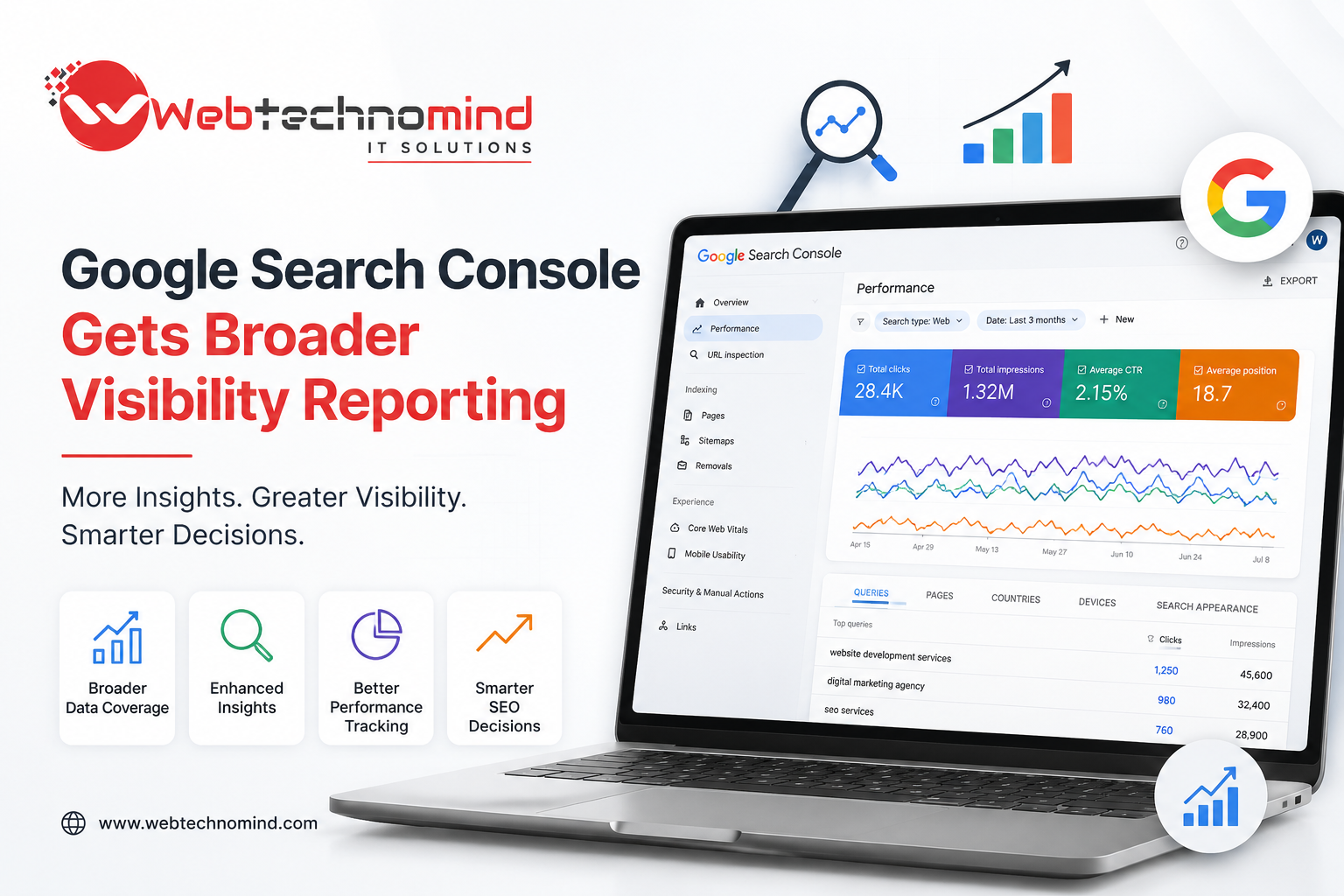
For many years, Search Console primarily focused on websites and provided important SEO metrics such as clicks, impressions, click-through rate and average position. These reports remain central to SEO analysis, but Google’s latest updates significantly broaden the type of content that can be evaluated.
With Platform properties, creators and publishers can connect supported social and video profiles to Search Console. Once connected, users can examine how their content appears in Google Search, Discover and Google News.
According to Google, the Insights report can show traffic trends, top-performing content, search queries used to discover content and audience countries. More detailed information is available through Performance reports.
This gives marketers an opportunity to understand whether content published outside their main website is also generating visibility through Google.
Another major development is Google’s expansion of reporting around AI-powered search experiences.
Google Search Console began rolling out reporting that helps selected website owners understand visibility associated with AI search experiences, including AI Overviews and AI Mode. Industry reports also indicate that related visibility information can be analyzed alongside other Google search performance data.
This is particularly important as Google’s search experience increasingly combines traditional organic listings with AI-generated answers.
For SEO professionals, simply tracking keyword rankings may no longer provide a complete picture of search visibility. A website can potentially gain exposure through an AI-generated result even when the traditional ranking position does not fully explain that exposure.
The development therefore points toward a broader definition of SEO visibility—one that includes how often a brand, website or piece of content is surfaced across different Google experiences.
The expansion of Search Console reporting could change how businesses measure SEO performance.
Previously, an SEO report might focus mainly on:
Now, marketers can increasingly consider additional areas such as social and video visibility on Google and exposure through AI-powered search experiences.
This broader reporting can help businesses identify content opportunities that traditional website analytics may overlook.
For example, a company publishing educational videos on YouTube could discover that its videos are receiving Google Search visibility for queries related to its products or services. Similarly, a brand may identify social posts that are appearing in Google Search and contributing to overall brand visibility.
The changes also highlight Google’s recognition that content strategies are no longer limited to websites.
Businesses today publish blog articles, videos, social posts, guides, product pages and other digital assets across multiple platforms. Search Console’s expanding capabilities can help marketers understand how these different content formats interact with Google’s search ecosystem.
Google has also published a guide explaining how creators and marketers can analyze social and video performance through Search Console. The guidance includes examining search queries, top-performing content, traffic trends and audience locations.
For digital marketing agencies, this can make reporting more comprehensive. Instead of presenting website SEO results separately from social and video performance, marketers can begin building a broader picture of how content earns visibility through Google.
Businesses should start treating Search Console as more than a basic keyword-ranking tool.
SEO teams should regularly monitor impressions and clicks, analyze emerging search queries, identify pages with high impressions but low CTR, and examine how different content formats are being discovered.
Companies with active YouTube or social media strategies should also consider connecting eligible platform properties and reviewing the available Search Console data.
At the same time, AI visibility should be viewed as an additional measurement layer rather than a replacement for traditional SEO metrics. Rankings, organic traffic, conversions and engagement remain important indicators of business performance.
Google’s latest Search Console developments indicate that search visibility is becoming broader and more complex.
The future of SEO reporting is likely to involve more than measuring where a webpage ranks for a particular keyword. SEO professionals will increasingly need to understand how websites, videos, social content and brands appear across traditional search, Discover, Google News and AI-powered experiences.
For businesses, this means content strategies should be designed around overall digital visibility rather than rankings alone.
As Google continues developing Search Console, the platform could become an increasingly important source of first-party insights for understanding how content performs across the changing search landscape.
For SEO and digital marketing professionals, the message is clear: visibility is no longer limited to the traditional search results page.

Google is continuing to transform its search engine with new artificial intelligence capabilities, making Search more conversational, personalized...

Google is making a major change to Local Services Ads (LSA) by bringing the platform more closely into...
The SEO landscape is changing again. For years, website owners primarily optimized their websites for Googlebot and other...
For years, marketers measured digital success through Google rankings, organic traffic, impressions, clicks, leads, and conversions. But the...