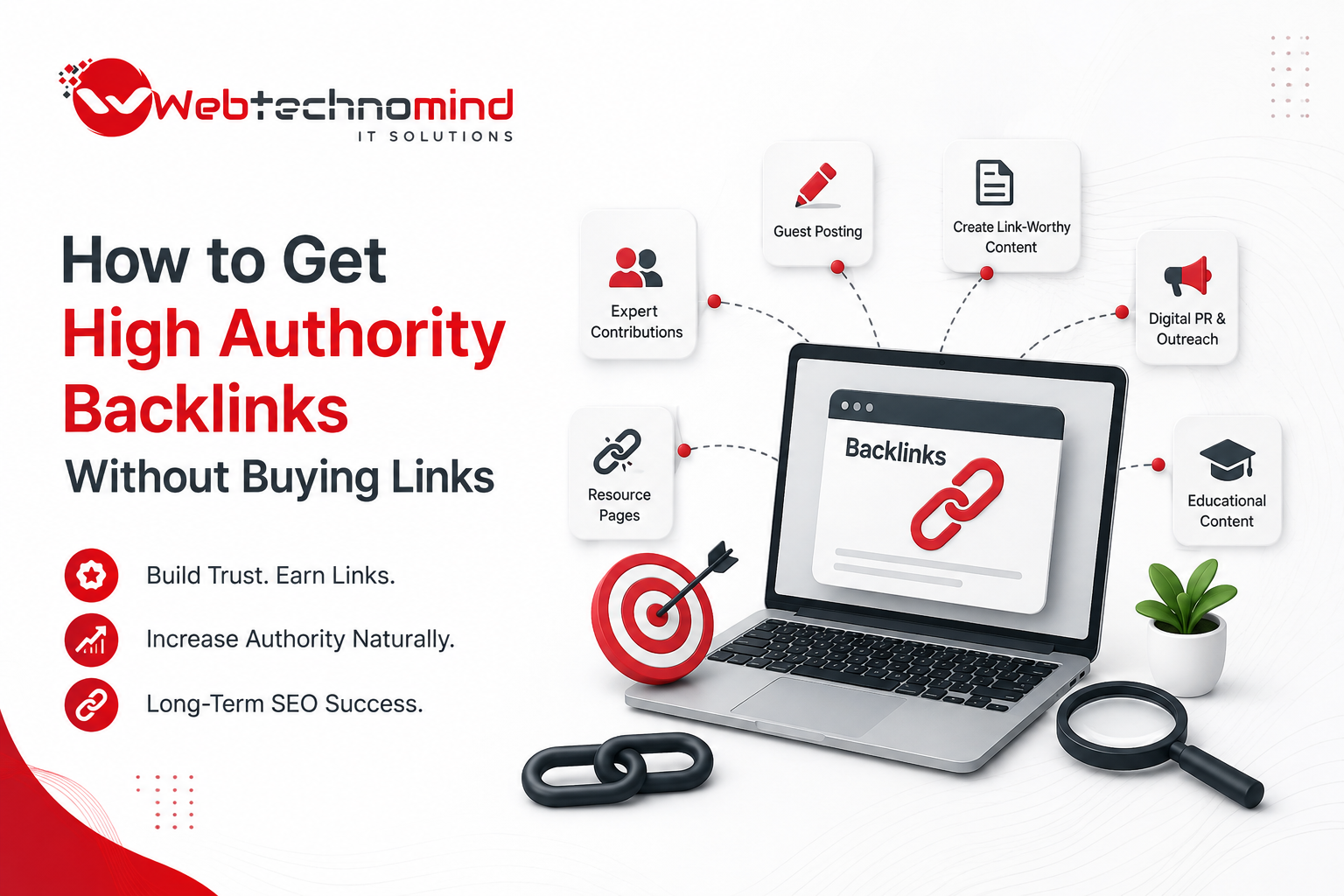
How to Get High Authority Backlinks Without Buying Links
- By admin
- Aug 24, 2026








Backlinks remain one of the most important elements of a successful SEO strategy. When reputable websites link to your content, search engines can view those links as signals of credibility, relevance, and authority. However, building backlinks does not mean you need to buy links or participate in risky link schemes.
In fact, earning high authority backlinks naturally can create stronger and more sustainable SEO results over time.
The challenge is knowing how to attract links from trusted websites without spending money on backlinks. The good news is that there are several ethical and effective strategies that can help you build a powerful backlink profile.
A backlink is a link from another website to your website. A high authority backlink comes from a website that has strong credibility, relevant content, established trust, and a solid reputation in its industry.
For example, a backlink from a respected industry publication, educational website, professional organization, or established business publication can be more valuable than dozens of links from low-quality websites.
However, authority is not the only factor that matters. Relevance is equally important. A backlink from a reputable website within your industry can be significantly more useful than a random link from an unrelated website.
Buying backlinks may seem like a quick way to improve rankings, but it can create long-term SEO risks.
Paid links intended specifically to manipulate search rankings can violate search engine guidelines. Low-quality backlink packages may also generate links from irrelevant websites, private blog networks, spam directories, or websites created primarily for SEO manipulation.
Instead of asking, “How many backlinks can I buy?”, focus on:
How can I create something valuable enough that authoritative websites want to reference it?
That mindset leads to a much more sustainable SEO strategy.
The foundation of natural link building is valuable content.
People do not normally link to ordinary promotional pages. They link to resources that help their audience understand something, solve a problem, make a decision, or discover useful information.
Create content such as:
For example, instead of publishing another generic article about SEO, you could create a detailed “2026 SEO Statistics Report” containing original research and useful industry data. Bloggers, marketers, journalists, and publishers may naturally reference it.
Original research is one of the strongest ways to earn high authority backlinks.
If you collect unique data, conduct surveys, analyze industry trends, or publish proprietary findings, other websites have a reason to cite your work.
You can conduct a survey among customers, analyze your own website performance, compare industry benchmarks, or investigate emerging trends.
The key is to present the information clearly and make it easy for publishers to reference.
Include:
When your research becomes a useful reference, backlinks can come naturally.
Digital PR combines public relations with SEO.
Instead of directly asking websites for links, you create newsworthy stories, expert insights, reports, or research that journalists and publishers may want to cover.
For example, if you operate a technology company, you could publish expert commentary about an important technology trend. Journalists writing about that topic may quote your expert and link back to your website.
Effective digital PR ideas include:
The goal is to become a useful source rather than simply asking for a backlink.
Guest posting can still be useful when it focuses on genuine expertise and audience value.
Look for authoritative websites within your industry that accept expert contributions. Study their existing content and pitch a topic that provides something useful to their readers.
Avoid submitting generic articles to hundreds of websites simply to obtain links.
A better approach is:
Quality and relevance should always come before quantity.
SEO is not only about algorithms. It is also about relationships.
Connect with:
Engage with their content, share useful insights, participate in discussions, and build genuine professional relationships.
Over time, these relationships can create opportunities for interviews, collaborations, expert roundups, podcasts, webinars, and editorial mentions.
Those opportunities can generate valuable backlinks without purchasing them.
The skyscraper technique involves finding popular content in your industry, creating a significantly better version, and promoting it to relevant websites.
Start by identifying content that already attracts backlinks.
Then improve it by adding:
Once your improved resource is published, reach out to websites that have referenced similar resources and explain why your updated content may be useful to their audience.
The outreach should be personalized rather than automated spam.
Your business may already be mentioned online without receiving a backlink.
Search for mentions of:
When you find a relevant mention without a link, contact the website owner and politely ask whether they would consider linking the mention to the appropriate page.
This strategy works because the website has already demonstrated interest in your brand.
Free tools and resources can attract backlinks naturally.
Consider creating:
A genuinely useful resource can continue earning backlinks long after publication.
For example, a digital marketing agency could create a free SEO audit checklist that bloggers, consultants, and businesses reference in their own articles.
Broken link building is another ethical way to earn backlinks.
Find relevant websites that link to outdated or unavailable resources. If you have a better, relevant replacement, contact the website owner and suggest your resource.
The process is simple:
Find broken link → Create or identify a relevant replacement → Contact website owner → Suggest the resource
The replacement must genuinely provide value. Reaching out with irrelevant pages will not produce good results.
Even excellent content may not earn backlinks if it is difficult to understand or reference.
Improve your content by using:
Make important information easy for journalists, bloggers, and researchers to find.
Publishing content is only half the job.
Promote your best resources through:
Do not spam links everywhere. Focus on reaching people who are genuinely interested in the topic.
More visibility increases the possibility that the right people discover and reference your content.
One relevant backlink from a respected industry publication can potentially be more valuable than hundreds of unrelated links.
Therefore, do not judge your backlink strategy only by the number of links you acquire.
Consider:
Relevance + Authority + Editorial Context + Trust + Content Quality
A smaller backlink profile made up of legitimate, relevant links can be stronger than a large profile filled with low-quality links.
Getting high authority backlinks without buying links requires patience, creativity, and a commitment to producing valuable content.
The most effective approach is not to chase backlinks directly. Instead, create resources, research, insights, and experiences that other websites genuinely want to reference.
Use content marketing, digital PR, original research, expert relationships, guest contributions, broken link opportunities, unlinked brand mentions, and useful free resources to build your backlink profile naturally.
Remember, sustainable SEO is a long-term process. The goal is not to collect as many backlinks as possible—it is to earn the right backlinks from trustworthy and relevant websites.
When your website consistently demonstrates expertise, credibility, and value, high-quality backlinks become a natural result of a strong SEO strategy.
Read More

In today’s competitive digital marketplace, having a website is only the first step towards building a successful online...

In today’s digital-first marketplace, having a website is not enough. Your customers need to find your business when...

Search is changing. People are no longer relying only on traditional Google results to discover businesses, products and...
Search is changing. People no longer rely only on traditional Google results to discover businesses, products, services, and...