







For small businesses, being visible when local customers search online can make a significant difference in generating calls, website visits, store visits, and qualified leads. Whether you run a restaurant, dental clinic, service company, retail store, consultancy, or local professional service, local SEO helps your business appear in front of people who are actively looking for what you offer.
Unlike traditional SEO, local SEO focuses on improving your visibility for searches with local intent, such as “digital marketing agency near me,” “best dentist in Kolkata,” or “web development company in Kolkata.”
If you are a small business owner looking to improve your local search presence, this local SEO checklist for small businesses covers the essential steps you should follow.
Local SEO (Search Engine Optimization) is the process of optimizing your online presence so your business can appear prominently in search results for location-based queries.
Google uses various signals to determine which local businesses should appear for a search. These include relevance, proximity, business information, reviews, website content, links, and overall online prominence.
A strong local SEO strategy can help your business appear in:
For small businesses, local SEO can be especially valuable because it allows you to compete for customers in your target geographic area without requiring the enormous budgets often associated with traditional advertising.
One of the most important steps in local SEO is creating and properly optimizing your Google Business Profile.
Make sure your profile includes accurate and complete information, including:
Keep your information accurate and consistent. Incorrect business hours, phone numbers, or addresses can create a poor customer experience and negatively affect local visibility.
Regularly add fresh photos, updates, offers, and relevant information to keep your profile active.
NAP stands for Name, Address, and Phone Number.
Your business information should be consistent across your website, Google Business Profile, social media accounts, directories, and other online platforms.
For example, avoid using different versions of your business name or phone number across different listings.
Consistent NAP information helps search engines understand that different online mentions refer to the same business.
Keyword optimization remains an important part of local SEO.
Research keywords that potential customers actually use when searching for your products or services.
Examples include:
Use your primary local keywords naturally in important areas such as:
Avoid keyword stuffing. Your content should be written primarily for users, with keywords incorporated naturally.
If your business serves multiple locations, consider creating useful location-specific pages.
For example, a digital marketing company could create pages targeting:
However, each page should provide genuinely useful and unique information. Simply replacing the city name on identical pages can create low-quality location pages.
Include information about your services, local customers, areas served, common customer needs, and relevant local insights.
Your local landing pages should have strong on-page SEO.
Check the following:
Your website should make it immediately clear what your business does, where it operates, and how customers can contact you.
Online reviews are an important part of local search visibility and customer trust.
Encourage satisfied customers to leave honest reviews on your Google Business Profile and other relevant platforms.
A simple review strategy can include:
Never purchase fake reviews or create misleading reviews. Genuine customer experiences are much more valuable for long-term reputation and local SEO.
Getting reviews is only part of the process. You should also respond to them.
Thank customers for positive feedback and respond professionally to negative reviews. Where appropriate, acknowledge the concern and offer a way to resolve the issue.
Regular review responses can demonstrate that your business actively engages with customers.
A local citation is an online mention of your business, usually including information such as your business name, address, phone number, and website.
Look for reputable and relevant business directories, industry-specific directories, local chambers, and regional business platforms.
Focus on quality and relevance rather than creating hundreds of low-quality listings.
Backlinks from relevant websites can strengthen your website’s authority.
For local businesses, valuable backlink opportunities may include:
For example, a Kolkata-based technology company could benefit from being featured in a relevant local business publication or technology community.
Publishing useful local content can support both SEO and customer acquisition.
Content ideas include:
For example, an IT company could publish an article such as “How Much Does Website Development Cost in Kolkata?”
This type of content can attract users who are already researching a service.
Structured data can help search engines better understand important information about your business.
Consider implementing appropriate LocalBusiness schema markup on your website.
Depending on your business, structured data may communicate information such as:
Schema markup should accurately represent information visible on your website.
A large percentage of local searches happen on smartphones.
Your website should therefore work smoothly across mobile devices.
Check:
A mobile visitor should be able to understand your service and contact your business quickly.
Website performance affects both user experience and search performance.
Compress large images, minimize unnecessary scripts, use reliable hosting, enable caching where appropriate, and regularly test your website’s performance.
Also make sure visitors can quickly find:
You cannot improve what you do not measure.
Use tools such as Google Search Console and analytics platforms to monitor:
Track your rankings for important local keywords over time, but focus on business outcomes rather than rankings alone.
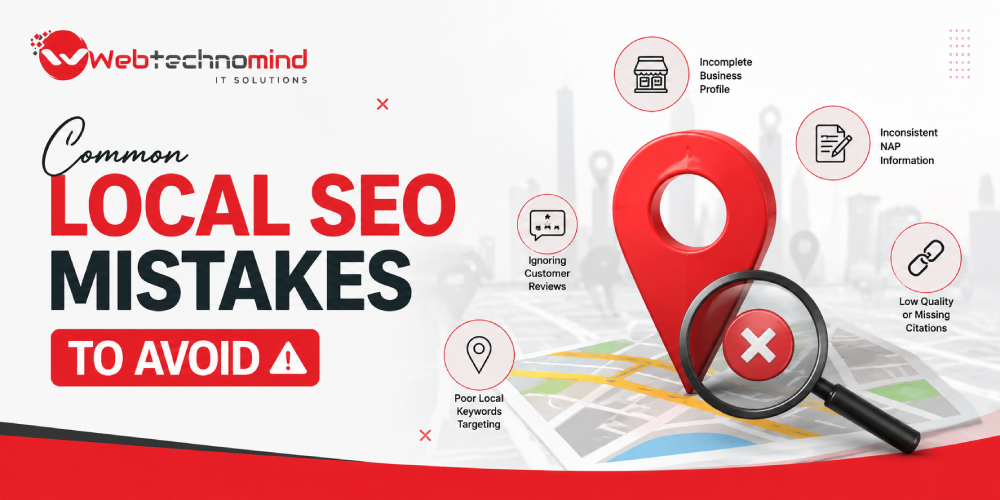
Small businesses often make a few common mistakes that can limit their local visibility:
Avoiding these mistakes can help create a stronger and more sustainable local SEO strategy.
Before considering your local SEO setup complete, make sure you have:
Local SEO is one of the most effective digital marketing strategies for small businesses that depend on customers from a specific city, region, or service area. By optimizing your Google Business Profile, maintaining consistent business information, targeting relevant local keywords, earning genuine reviews, creating useful local content, and improving your website experience, you can build stronger visibility in local search.
The key is consistency. Local SEO is not a one-time activity. Search algorithms, competitors, customer reviews, and local search behavior continue to change. Regularly reviewing your local SEO checklist and improving your online presence can help your small business attract more qualified local customers and generate sustainable growth.
If your business needs professional help with local SEO, SEO services, website optimization, or digital marketing, WebTechnoMind can help you build a strategy focused not only on rankings, but also on generating meaningful traffic, leads, and business growth.

In today’s competitive digital marketplace, having a website is only the first step towards building a successful online...

In today’s digital-first marketplace, having a website is not enough. Your customers need to find your business when...

Search is changing. People are no longer relying only on traditional Google results to discover businesses, products and...

Search is changing. People no longer rely only on traditional Google results to discover businesses, products, services, and...