International SEO Guide for Global Businesses
- By admin
- Aug 17, 2026

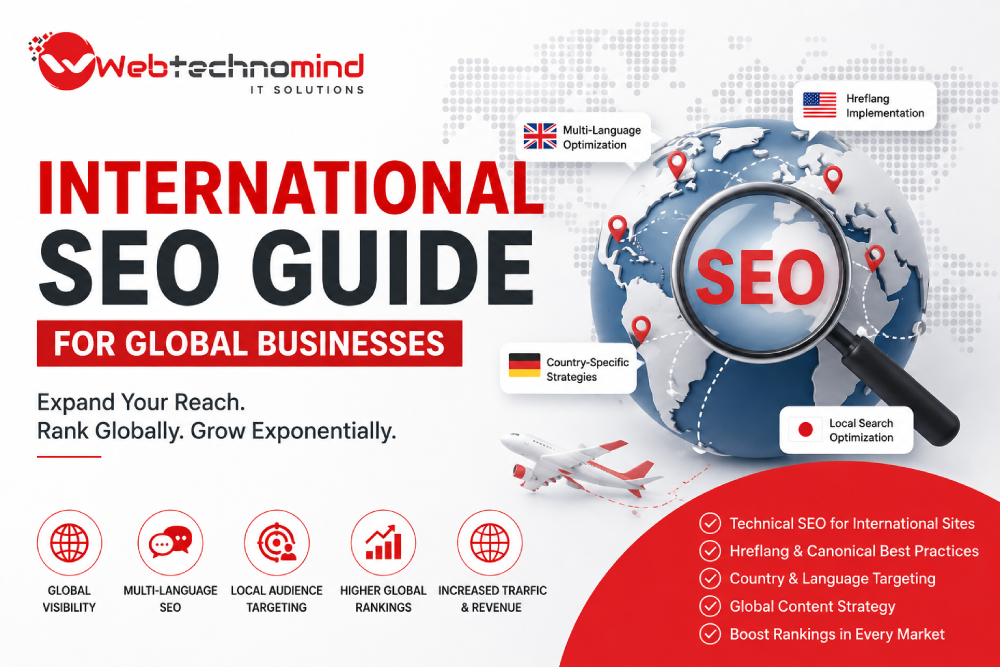







Expanding into international markets can open the door to millions of new customers, but simply translating your website is not enough. If your business operates across multiple countries or languages, you need a structured international SEO strategy to make sure the right audience discovers the right content.
International SEO helps businesses improve their organic visibility across different countries, regions and languages. It combines technical SEO, keyword research, content localization and website architecture to create a better experience for international users.
In this International SEO guide for global businesses, we’ll cover the key strategies you need to build a scalable international search presence.
International SEO is the process of optimizing a website so search engines can identify the countries and languages your business is targeting.
For example, an international company might create different experiences for:
The objective is not simply to rank globally. It is to make sure your website appears to the right users in the right market with the most relevant content.
A global SEO strategy can help businesses:
For businesses entering new markets, organic search can become a long-term customer acquisition channel when the website is properly localized and optimized.
Before changing your website, determine exactly where you want to compete.
Don’t try to target every country simultaneously. Start with markets where your products or services have strong demand and realistic growth potential.
Research:
For example, targeting the United States and United Kingdom may require different keyword strategies even though both markets primarily use English.
One of the biggest mistakes businesses make is translating keywords directly from one language to another.
People in different countries may use completely different search terms for the same product or service.
Your international keyword research should consider:
For example, users in the US may search for “digital marketing agency,” while users in another market may use a different local phrase for the same service.
Research keywords market by market, rather than translating one master keyword list.
Your URL structure helps users and search engines understand your international targeting.
Common approaches include:
Examples:
example.co.uk
example.de
example.fr
Country-specific domains provide a strong geographic signal but require managing multiple domains.
Examples:
example.com/uk/
example.com/de/
example.com/fr/
Subdirectories are often easier to manage because international content remains under one primary domain.
Examples:
uk.example.com
de.example.com
Subdomains can separate regional websites but require careful technical and SEO management.
For many businesses, subdirectories can provide a practical balance between scalability and centralized website management.
Hreflang is an important technical SEO element for multilingual and multi-regional websites.
It helps search engines understand which version of a page is intended for a particular language or region.
For example, a website may have:
Correct hreflang implementation can help search engines serve the appropriate regional version to users.
Make sure:
Incorrect hreflang implementation can create confusion, so it should be tested carefully.
Translation and localization are not the same thing.
Translation converts words from one language to another.
Localization adapts the content to the target market.
Localization can include:
For international SEO, localized content is generally more valuable than simple machine-translated pages.
Every international version of your page should have unique, localized:
Don’t simply duplicate the same English metadata across every regional page.
Instead, optimize each page based on local search behavior and the language of the target audience.
Internal linking becomes even more important when a website contains multiple markets.
Connect relevant pages within each regional website structure.
For example:
/us/services/seo/
can link to other relevant US pages instead of sending users unnecessarily to the UK or Indian version.
Use natural, localized anchor text to improve navigation and contextual relevance.
If your business has physical locations in multiple countries, combine international SEO with local SEO.
Optimize:
Each location should have accurate and consistent business information.
Backlinks from relevant websites in your target market can strengthen your international presence.
Consider:
Focus on relevance and quality, not simply the number of backlinks.
A relevant industry website in your target country can be more valuable than hundreds of unrelated links.
International users may access your website from different network environments and geographic locations.
Make sure your website has:
Performance should be monitored across your major target markets rather than only from your headquarters.
International websites can easily create duplicate or near-duplicate content.
For example, separate US, UK and Australian pages may contain almost identical English content.
Instead of duplicating pages unnecessarily:
Every international page should have a clear purpose.
Your international SEO strategy should be measured separately for each market.
Monitor:
Use tools such as Google Search Console and analytics platforms to understand how each market performs.
If one country generates traffic but very few conversions, investigate the problem instead of simply increasing content production.
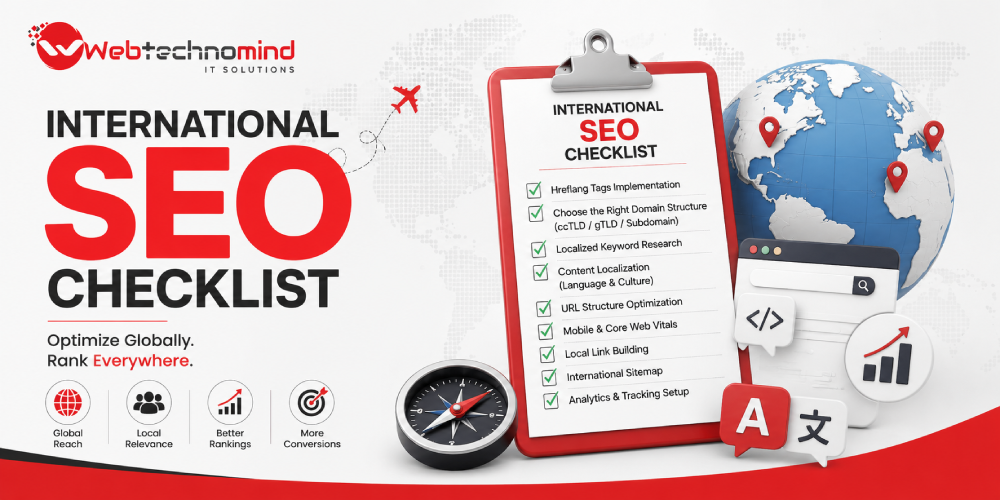
Before launching your global SEO strategy, check:
International SEO is more than translating a website into multiple languages. A successful global SEO strategy requires market-specific keyword research, localized content, correct website architecture, hreflang implementation, technical optimization and continuous performance tracking.
Businesses that approach each market according to its unique search behavior have a stronger opportunity to build sustainable international organic visibility.
Whether you’re entering one new market or expanding across multiple countries, a well-planned international SEO strategy can help you reach the right audience, build visibility and generate sustainable organic growth.

In today’s competitive digital marketplace, having a website is only the first step towards building a successful online...

In today’s digital-first marketplace, having a website is not enough. Your customers need to find your business when...

Search is changing. People are no longer relying only on traditional Google results to discover businesses, products and...

Search is changing. People no longer rely only on traditional Google results to discover businesses, products, services, and...