White Hat Link Building Strategies That Work in 2026
- By admin
- Aug 17, 2026

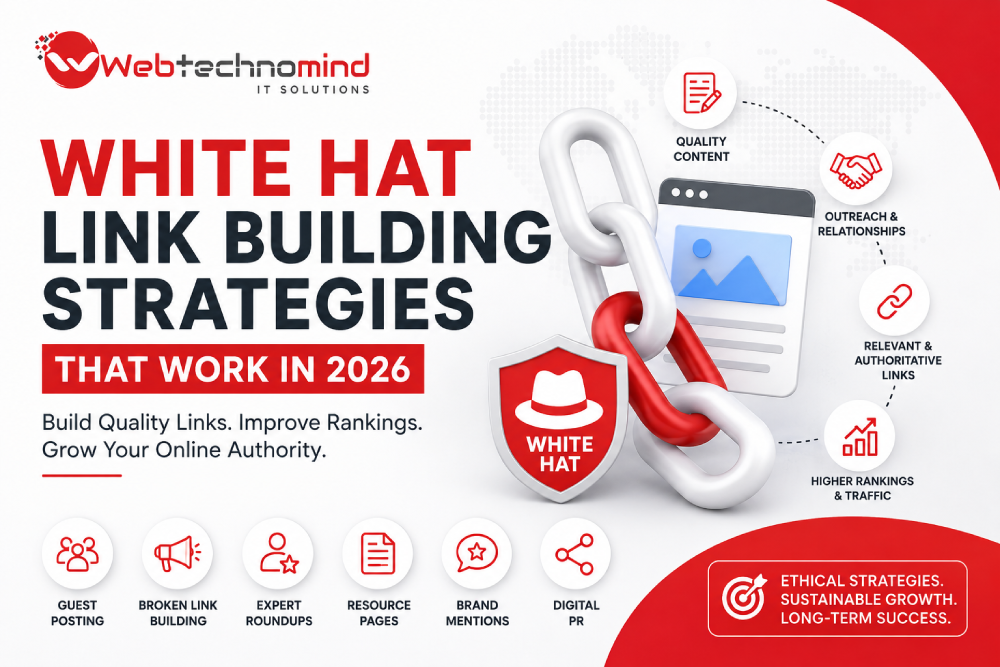







Backlinks remain an important part of SEO, but the way businesses build links has changed. In 2026, successful link building is less about collecting hundreds of backlinks and more about earning relevant, trustworthy and editorially valuable links.
Search engines are becoming better at identifying manipulative SEO practices, making outdated tactics such as link farms, paid link schemes and excessive exact-match anchor text increasingly risky.
This is where white hat link building becomes important.
White hat link building focuses on earning backlinks through useful content, genuine relationships, digital PR, expert insights and other ethical SEO practices.
In this guide, we’ll explore practical white hat link building strategies for 2026 that businesses can use to strengthen their website authority and organic visibility.
White hat link building is the process of acquiring backlinks through legitimate SEO and marketing techniques that follow search engine guidelines.
A quality backlink typically comes from a relevant website and provides genuine value to its audience.
For example, a technology publication linking to a useful software development guide is much more meaningful than a random website linking to the same page without context.
The goal should be:
Create something worth referencing → Promote it to the right audience → Earn relevant backlinks.
Backlinks can help search engines discover pages and understand relationships between websites.
High-quality backlinks can also:
However, more backlinks do not automatically mean better SEO. A smaller number of relevant, editorially earned links can be more valuable than thousands of low-quality links.
The foundation of effective link building is content that people actually want to reference.
Examples include:
For example, an agency could publish an annual report on digital marketing trends containing original data. Bloggers and publications may then reference the report when discussing the industry.
The best link-building asset is often something that other websites naturally want to cite.
Digital PR combines public relations with SEO to generate brand exposure and authoritative backlinks.
You can create stories around:
Pitch these stories to journalists, publications and relevant industry websites.
The objective isn’t to ask every website for a link. Instead, provide genuinely newsworthy information that journalists may want to cover.
Successful link building is often relationship-driven.
Identify:
Engage with their content before asking for anything.
Comment thoughtfully, share useful resources and provide expert insights. Over time, genuine relationships can create opportunities for mentions, collaborations and editorial backlinks.
Guest posting can still be useful when it is focused on quality and relevance.
Instead of publishing the same article across dozens of websites, contribute original content to reputable publications within your industry.
A strong guest post should:
Don’t treat guest posting as a volume-based backlink strategy.
Your business may already be mentioned online without receiving a backlink.
Search for:
When you find a relevant unlinked mention, contact the website owner and politely ask whether they can link the mention to the appropriate page.
This can be one of the easiest ways to earn relevant backlinks because the website has already mentioned your brand.
Broken link building involves identifying relevant broken external links on websites and suggesting your own useful resource as a replacement.
The process is simple:
Find broken link → Create or identify a better resource → Contact website owner → Suggest replacement.
The replacement must genuinely satisfy the purpose of the original link.
Avoid suggesting your page simply because you want a backlink.
Journalists, bloggers and publishers often need expert opinions for articles.
You can participate by providing:
If your contribution is published, the publication may include your name, company and website.
This approach can build both backlinks and brand authority.
Data-driven content is highly linkable.
Consider publishing:
For example, a digital agency could survey 500 businesses about their SEO budgets and publish the findings.
Other websites may reference the data when creating their own articles.
Create comprehensive resources that solve specific problems.
Examples include:
A genuinely useful resource can attract links naturally over time.
Link building shouldn’t exist separately from your content strategy.
Create topic clusters where multiple pages cover related subjects and connect naturally.
For example:
SEO
→ Technical SEO
→ On-Page SEO
→ Off-Page SEO
→ Link Building
→ Local SEO
→ International SEO
This structure helps users discover related information and creates stronger topical coverage.
Don’t evaluate backlink opportunities solely using metrics such as Domain Authority or Domain Rating.
Before pursuing a backlink, ask:
A relevant industry website with a smaller audience may provide more meaningful value than a large but unrelated website.
If you’re building backlinks in 2026, avoid manipulative tactics such as:
These tactics can create long-term SEO problems and damage your website’s reputation.
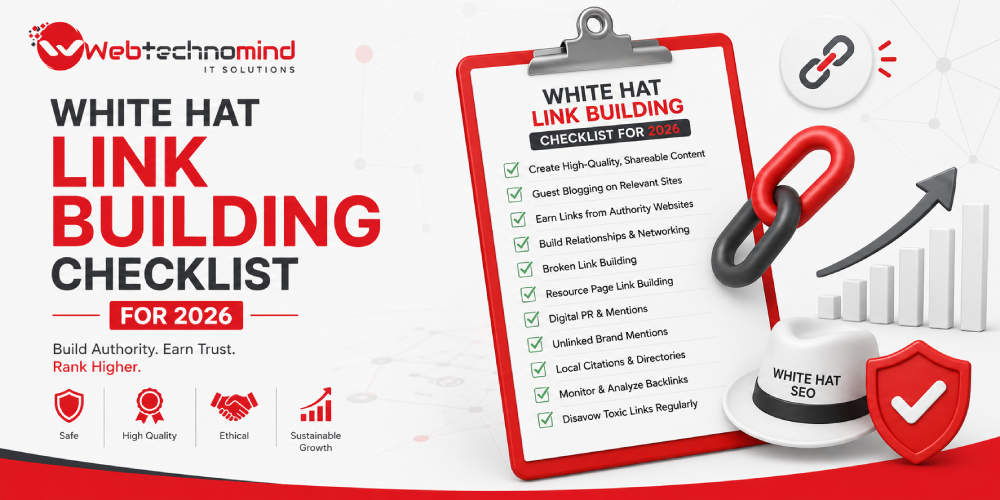
Before pursuing a backlink, ask:
If the answer is yes to most of these questions, you’re likely following a sustainable approach.
White hat link building in 2026 is about earning attention, trust and references—not manipulating search rankings.
The most sustainable strategies combine valuable content, digital PR, expert contributions, industry relationships, original research, strategic guest posting and genuine outreach.
Instead of asking, “How many backlinks can I build?”, ask:
“What can I create that authoritative websites genuinely want to reference?”
That shift can help your business build stronger backlinks, improve brand credibility and create a more sustainable SEO strategy.
For businesses looking to improve their organic visibility, combining white hat link building with technical SEO, content marketing and a broader search strategy can create a stronger foundation for long-term growth.
In today’s competitive digital marketplace, having a website is only the first step towards building a successful online...

In today’s digital-first marketplace, having a website is not enough. Your customers need to find your business when...
Search is changing. People are no longer relying only on traditional Google results to discover businesses, products and...
Search is changing. People no longer rely only on traditional Google results to discover businesses, products, services, and...